Last updated November 21, 2026
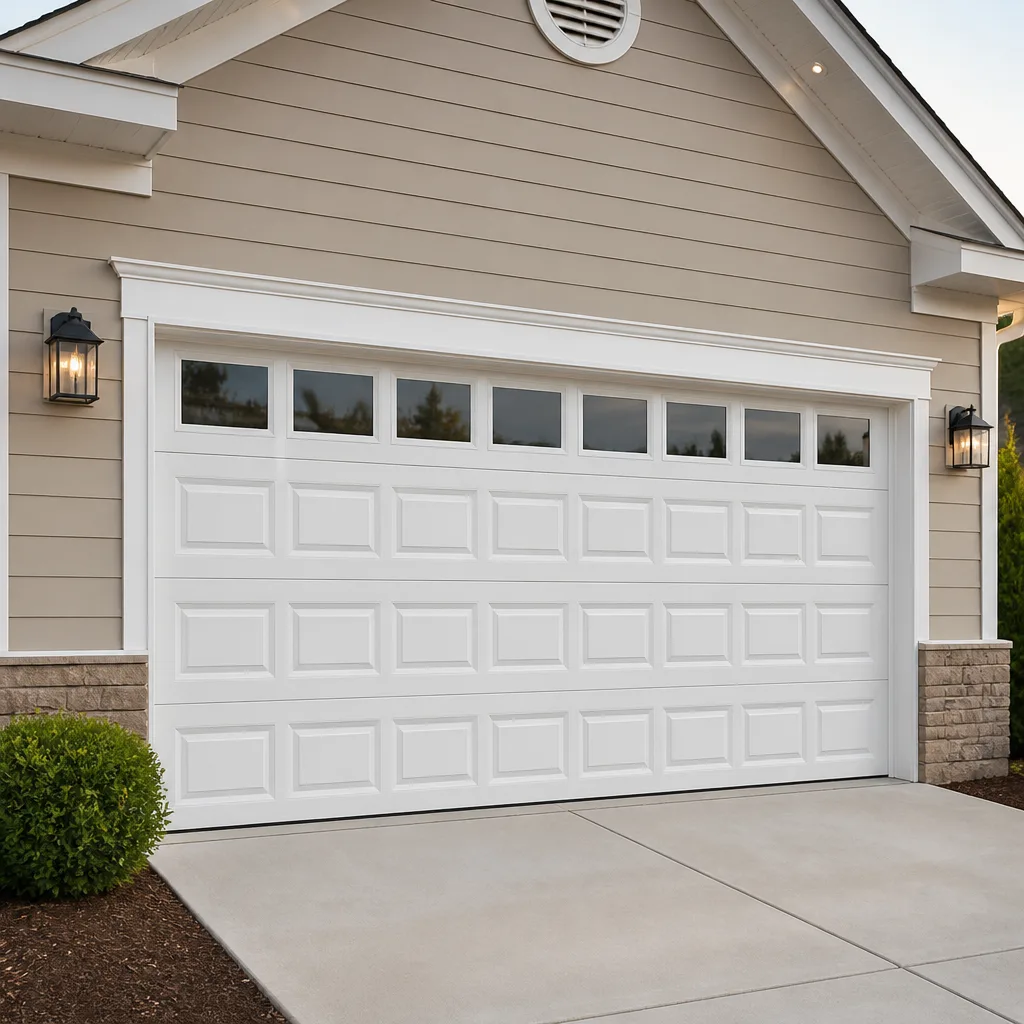 Raised-panel steel
 Carriage house
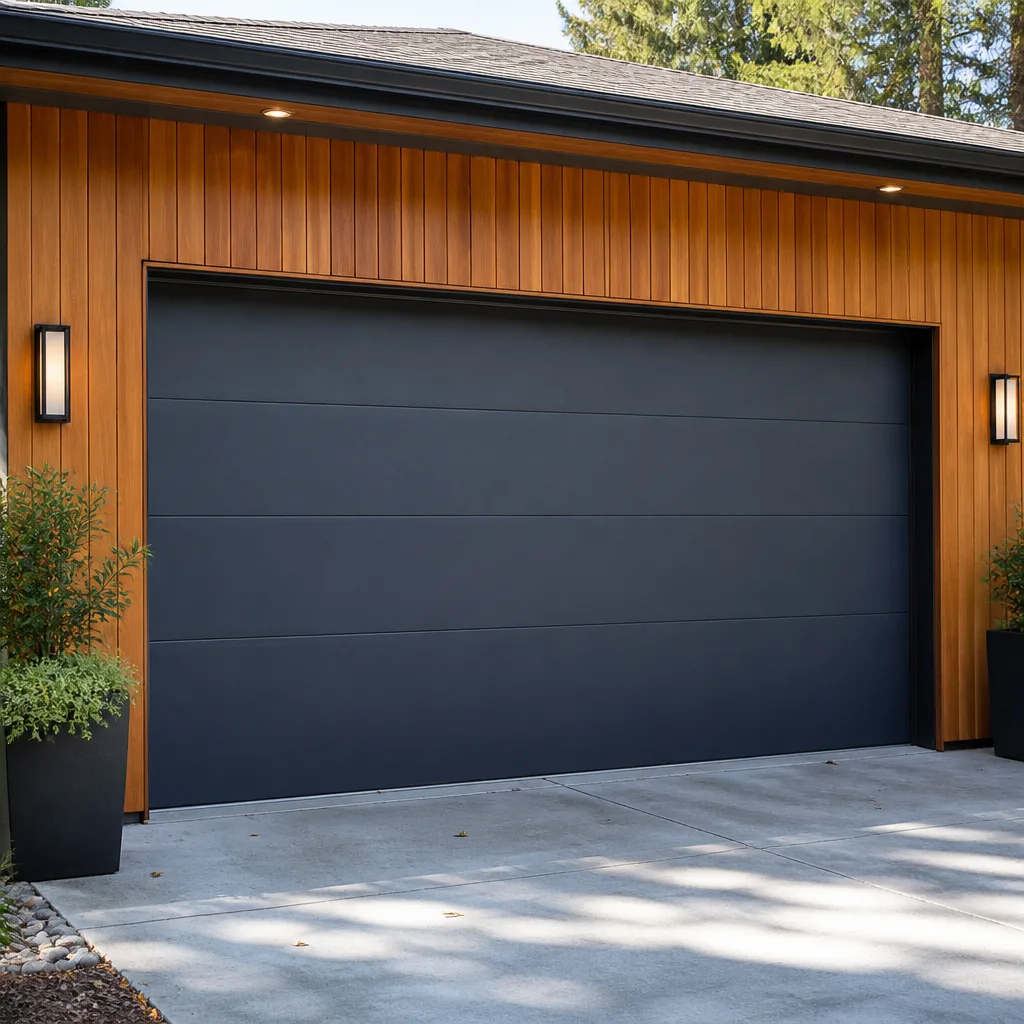 Modern flush
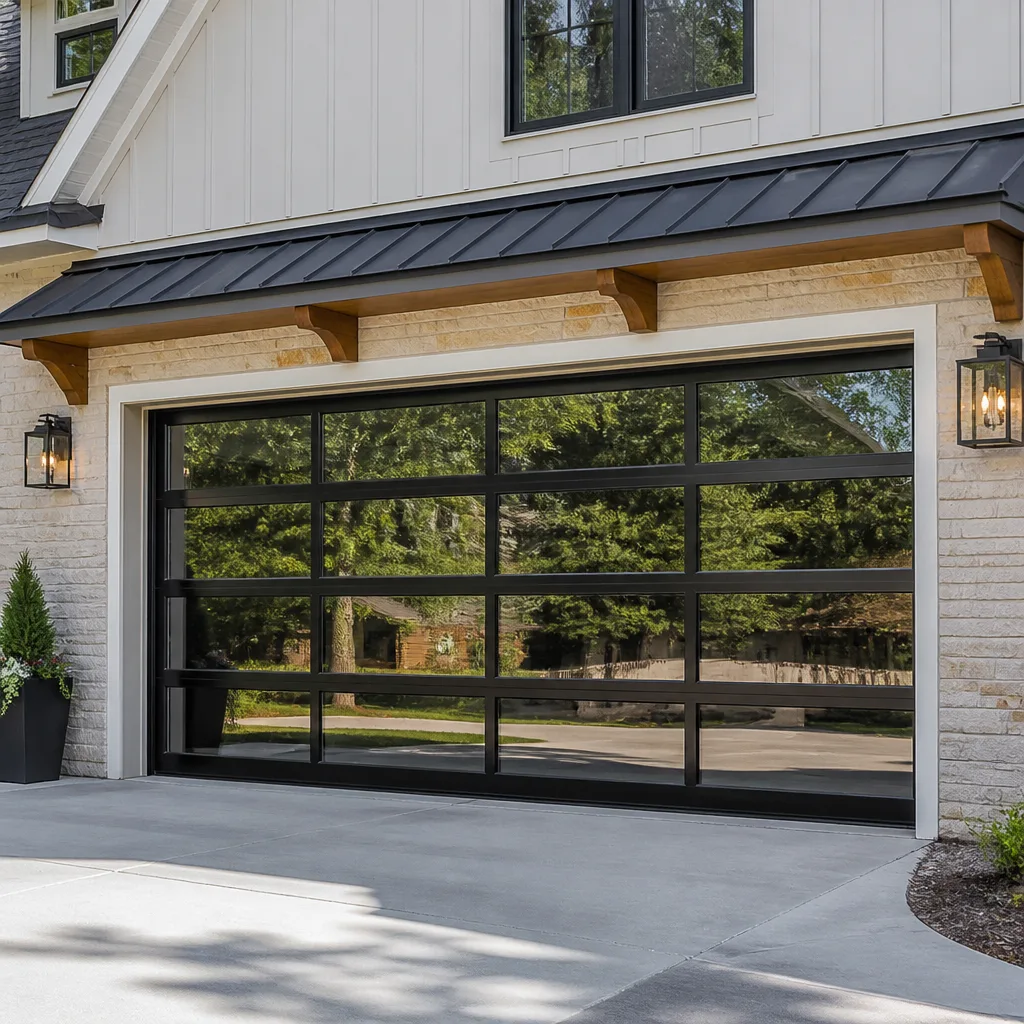 Full-view glass
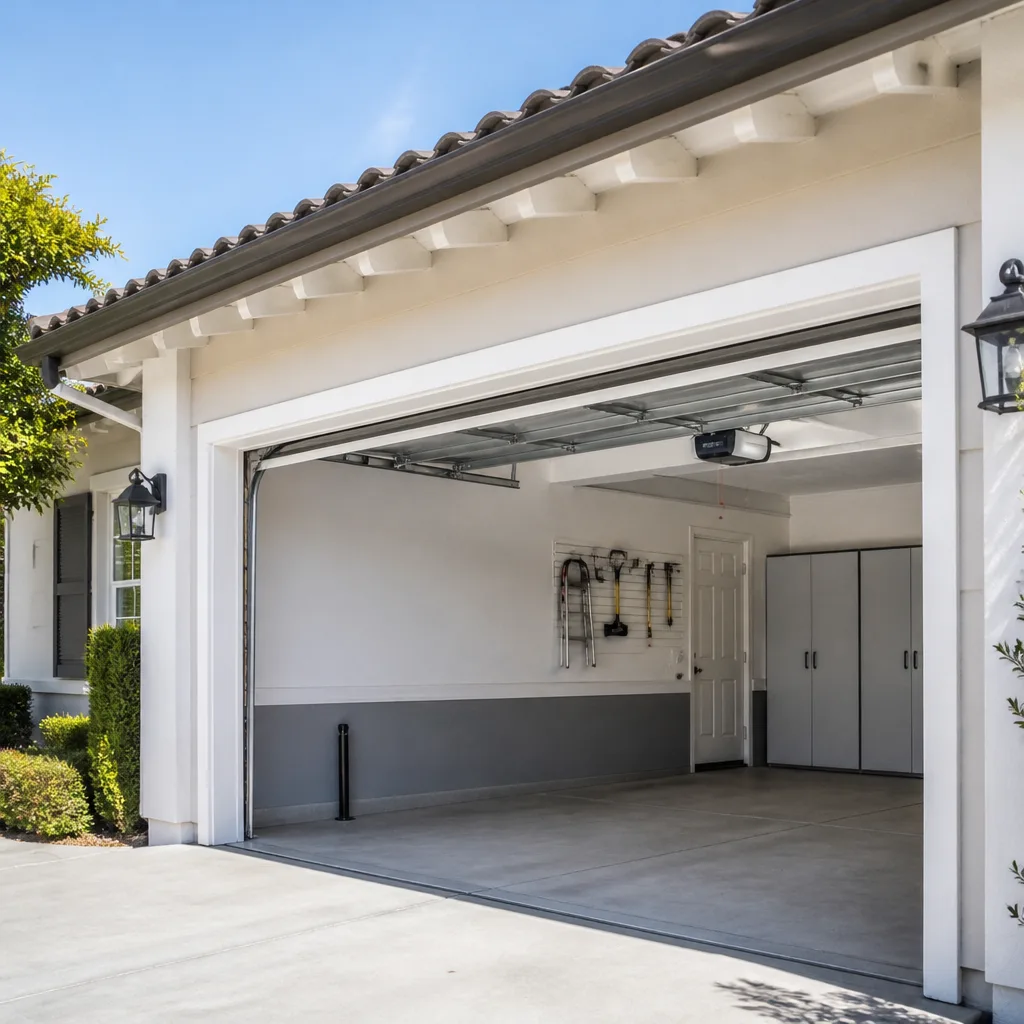 LiftMaster openers
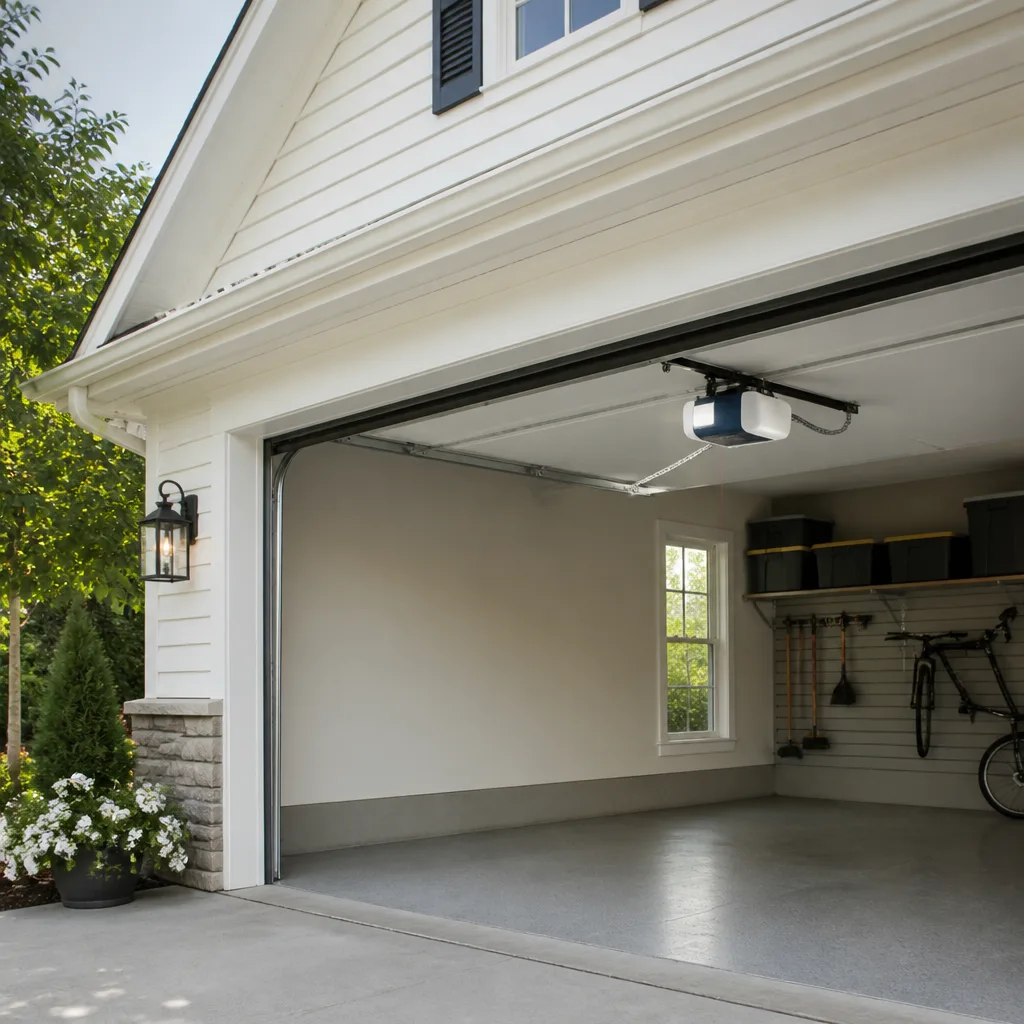 Chamberlain openers
Full 25-point door and opener safety check with every visit - springs, cables, rollers, tracks, and your LiftMaster or Chamberlain opener included
You get a price before we start. It does not change when the pro arrives.
Get your free estimateGarage Door Repair Maintenance Checklist for Pine Hills Homeowners
Most garage door advice you’ll find online was written for a colder climate. It tells you to check for frost damage, watch for ice in the tracks, and prepare for the long winter freeze. None of that applies here. The number-one cause of premature spring failure in Central Florida isn’t age. It’s rust, and it builds up quietly in the humidity that hangs over Pine Hills for most of the year. That’s the piece most checklists miss. A simple monthly wipe-down, done at the right interval, is what slows it down. This guide reorders the maintenance tasks around what actually breaks first here: humidity, heat expansion in summer, and the rainy season that tests every seal on your door. You’ll finish knowing exactly what to check, when to check it, and what to leave completely alone.
Quick Answer
A proper garage door maintenance routine in Pine Hills runs about 20 minutes a month: wipe springs and hardware with a rust inhibitor, lubricate the moving parts on a heat-adjusted schedule, test the auto-reverse and photo-eye sensors, and inspect weatherstripping before the rainy season starts. Spring replacement, cable work, and any repair involving high-tension hardware are strictly for a trained technician. Everything else you can do yourself safely.
Styles & brands we work with
- Raised-panel steel
- Carriage house
- Modern flush
- Full-view glass
- LiftMaster openers
- Chamberlain openers
Table of Contents
- Why Rust Is the Real Enemy in Pine Hills
- The Monthly Garage Door Inspection Checklist
- Lubrication on a Florida Schedule
- Testing Auto-Reverse and Photo-Eye Sensors Safely
- Weatherstripping and the Rainy Season Window
- What You Can Do vs. What Needs a Technician
- Opener Maintenance for LiftMaster, Chamberlain, Genie, and More
- A Season-by-Season Plan for Pine Hills
Why Rust Is the Real Enemy in Pine Hills
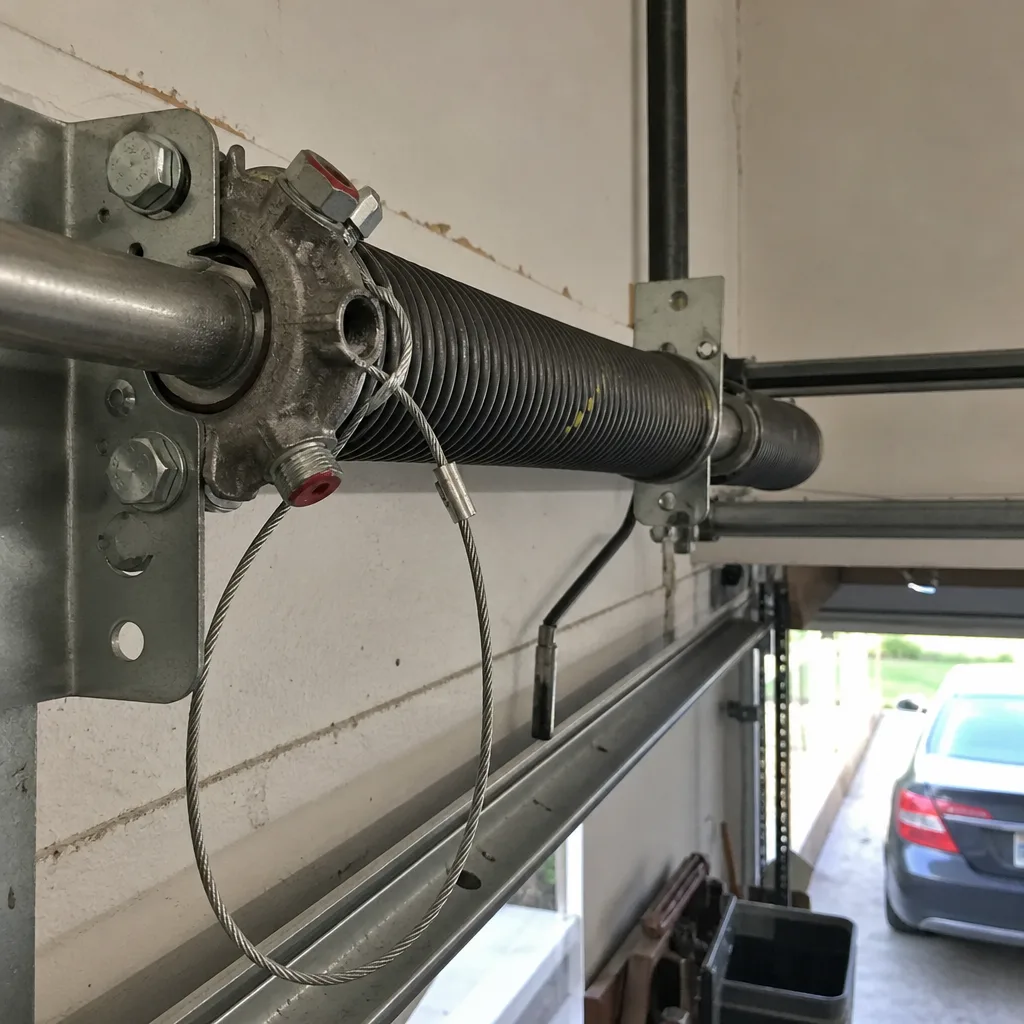
Pine Hills sits in a band of Florida where the humidity rarely drops low enough to dry out the inside of a garage. Every time you open the door, moist air rolls in and settles on the coldest metal in the room: the springs, the hinges, the bearings, and the track bolts. Over months, that moisture turns into surface rust, and surface rust turns into pitting. Pitting is what a spring snaps on. A spring that should last years can fail early when rust eats into the coil and weakens the steel where it flexes.
This is why a humidity-focused checklist beats a generic one. Instead of inspecting once in spring and once in fall, Pine Hills homeowners should be wiping down the load-bearing metal monthly. You’re not trying to make it shiny. You’re interrupting the rust cycle before it starts. A clean, lightly oiled surface on a torsion spring and its end plates can add meaningful life to the part.
We’ve seen the difference this makes. Doors where the springs were wiped monthly show far less pitting than doors where the hardware was ignored until something snapped. And a spring that’s already pitted can’t be rescued by a wipe-down: at that point it’s time for garage door spring repair, done by someone trained for it.
- What to wipe: the torsion spring coils, the end bearing plates, the hinge knuckles, and the track where the rollers ride.
- What to use: a rust inhibitor or a lint-free rag with a small amount of lubricant, not a bucket of water.
- What to skip: anything inside the opener motor housing, and anything that requires touching the cables under tension.
The Monthly Garage Door Inspection Checklist
Twenty minutes once a month covers everything a homeowner can safely handle. Run through this list in order, and note anything that looks or sounds wrong so you can describe it accurately if you ever need to call.
- Wipe the springs and hinges. A light coat of rust inhibitor on the coils, end plates, and hinges. This is your biggest humidity defense.
- Look at the rollers. Steel rollers should spin freely. Nylon rollers should have no flat spots or cracks. A wobbling roller wears out the track.
- Check the track for debris. Pine Hills garages collect dust, leaves, and the occasional small item that gets knocked against the rails. A track with debris jumps and strains the opener.
- Test the balance. Disconnect the opener (usually a pull cord) and lift the door halfway. If it stays put, it’s balanced. If it drops or rises, the springs are out of adjustment or wearing.
- Listen to the opener. Grinding, rattling, or a strained hum points to a worn gear, a stripped sprocket, or a motor that’s working too hard.
- Test the safety reverse. Place a small object (a rolled-up towel works) in the door’s path and close it. The door should reverse on contact.
- Check the photo-eyes. Wave your hand in front of each sensor. The door shouldn’t close if one is blocked.
- Inspect the weatherstripping. Run your fingers along the bottom seal and the side jambs. A cracked or hardened seal lets water and pests in.
Write down the date and what you found. A written record helps when a technician asks what’s been happening and when.
Lubrication on a Florida Schedule
Northern guides tell you to lubricate the opener and hinges twice a year. That schedule doesn’t hold up here. Florida summers push garage temperatures well above outdoor air, and metal expands under that heat. Gaps open slightly, lubricant thins and runs, and hinges that felt smooth in March start to squeak by July. The practical answer is to lubricate more often in the warm months and less in the cooler ones.
- Hinges, rollers, and the torsion spring: once a month during the hot season, every other month in cooler weather.
- Opener chain or belt: every other month, or whenever you hear it straining. Check your manual for the brand-specific recommendation.
- Track: never lubricate the track itself. A dry track lets the rollers ride cleanly. Grease in the track collects grit and causes wear.
- What to use: a garage-door-specific or white lithium grease for hinges and bearings. A dry silicone spray on the springs and hinges is fine for the monthly wipe-down.
Heat expansion also causes roller wear to accelerate. A roller that’s slightly out of round in March can turn into a full wobble by August, and a wobbling roller wears a groove into the track. That’s a track problem, not just a roller problem, which is one of the reasons a small fix becomes garage door repair.
Testing Auto-Reverse and Photo-Eye Sensors Safely
The safety reverse and photo-eye system is the one part of your door that protects whoever walks under it. Testing it monthly is not optional, and it’s simple enough to do yourself. What’s not simple is adjusting or repairing the sensors, especially on newer openers where a misaligned or bypassed sensor can affect the warranty. Test them; don’t start taking them apart.
Here’s what a safe test looks like:
- Open the door fully and make sure nothing is in the way.
- Place a small, firm object (a rolled towel or a short piece of 2×4) on the floor in the middle of the opening.
- Press the wall button or remote to close the door. It should contact the object and immediately reverse.
- If the door doesn’t reverse, or pushes down on the object, stop using it and call for service. A door that fails the reverse test is a hazard.
- For the photo-eyes: with the door open, wave your hand in front of one sensor. If the door’s light blinks or the door won’t close, the sensor is working.
If a sensor keeps failing, check for a simple alignment problem first: the two units should point straight at each other, and the small LED on each should be lit steady. Sunlight on the sensor lens is a common culprit in a garage with a western exposure. If a basic alignment doesn’t fix it, that’s worth a call to garage door opener repair rather than trying to rewire anything yourself.
Safety note: never disable, tape over, or bypass a photo-eye sensor to “make the door close.” It exists because the door can hurt someone.
Weatherstripping and the Rainy Season Window
Weatherstripping is where most Pine Hills homeowners get caught out. The bottom seal, side jambs, and top seal are what keep the afternoon thunderstorms of the wet season out of your garage. Checked on a calendar-quarter schedule, they fail halfway through the season, letting water pool on the garage floor and humidity creep into everything stored inside. The right time to inspect them is a month before the rainy season is due to arrive, so worn seals can be replaced before the rain does the damage.
What to look for:
- Bottom seal: cracks, flattening, or hardened rubber that no longer touches the floor when the door is shut.
- Side jambs: gaps or peeling strips. A door that whines or grinds against the sides is often a jamb issue, not a track issue.
- Top seal: a gap between the door and the header lets in water and pests.
- The threshold: if water pools at the base, the seal isn’t sitting flush and the floor or the seal has moved.
Replacing a bottom seal is a job most homeowners can learn, but the top and side seals are worth having checked during a service call, because a poorly seated seal is often invisible from the outside. Keep an eye on the seal after a heavy storm too. In our experience, the storms here pack wind that can lift or shift a seal that’s already worn.
What You Can Do vs. What Needs a Technician
The line here is simple: if a task involves high-tension hardware, electricity inside the opener, or stepping onto a ladder to reach a part under load, it belongs to a technician. Everything else is fair game for a homeowner with a rag and a screwdriver. This breakdown is the one thing most checklists leave out.
Safe for homeowners:
- Wiping springs and hinges with rust inhibitor
- Lubricating hinges, rollers, and the opener chain or belt
- Testing the auto-reverse and photo-eye sensors
- Clearing debris from the tracks
- Balancing the door with the opener disconnected
- Inspecting weatherstripping and replacing the bottom seal
- Replacing remote batteries and re-syncing remotes
Needs a trained technician:
- Replacing torsion or extension springs
- Any work near the lift cables
- Straightening or replacing bent track
- Replacing a snapped cable or a broken cable drum
- Repairing the opener motor, circuit board, or logic board
- Adjusting opener force limits or travel limits beyond the manual’s basic steps
- Replacing a full door section or the full door
Springs and cables store enormous energy. A torsion spring that lets go can cause serious injury, and a cable can snap with enough force to break bones. That’s why a dedicated service for spring work matters. It’s not a job you learn from a video. When it’s time, the safe move is garage door spring repair by a technician who’s done it before. Our technicians have up to 9 years of experience with this kind of work.
Opener Maintenance for LiftMaster, Chamberlain, Genie, and More
Openers don’t break often, but when they do, the brand matters. A Clopay door might be paired with a LiftMaster opener, a Chamberlain, or a Genie, and each brand has its own quirks: gear wear on one, a specific learning sequence on another, sensor wiring that runs differently. Knowing the brand up front saves time on the call. We work on LiftMaster, Chamberlain, Genie, Clopay, Amarr, Wayne Dalton, Craftsman, and Raynor, so we’re familiar with the specific system on your door rather than guessing.
Homeowner-level opener maintenance is limited to a few things:
- Chain or belt tension: check for slack. A loose chain sags and jumps; an over-tight one strains the motor. Follow the brand’s manual for the exact tension.
- Rail and trolley: wipe clean, don’t grease. Debris on the rail causes drag.
- Remote batteries: replace when the range drops. Re-sync remotes only through the manufacturer’s pairing process.
- Battery backup: if your opener has one, test it yearly by unplugging the opener for a few minutes and trying the door.
- Listen for changes: a new grinding sound or a hum without movement is a sign to stop using it and call.
What you should not do is open the motor housing or attempt to replace a gear or logic board. That’s an opener repair task for a technician. If your opener is grinding, straining, or simply not responding, that’s the time to bring in someone rather than keep cycling it. A worn gear chews up the sprocket if ignored, and a small repair turns into a full opener replacement.
A Season-by-Season Plan for Pine Hills
A checklist only works if it fits the year you actually have, not a year in a colder place. Pine Hills has warm, humid summers and mild winters. That shape dictates the plan. Here’s how to spread the checklist across the year so no task gets skipped and no detail gets overdone.
Wet season approach:
- Inspect and replace worn weatherstripping before the afternoon storms are due.
- Wipe springs and hinges monthly. Humidity is at its highest.
- Test the safety reverse and photo-eyes monthly. Wind and water can shift sensors.
- After every heavy storm, do a quick visual pass on the track, seal, and bottom threshold.
Dry season approach:
- Lubricate on the normal monthly schedule for moving parts.
- Wipe the springs every other month instead of monthly.
- Check the balance and roller condition. This is a good time to catch wear before the heat returns.
- Test the opener’s battery backup and replace remote batteries.
Cool season approach:
- Full balance test and full visual inspection with the door disconnected.
- Inspect weatherstripping in advance of the next rainy season.
- Check every sensor, test every remote, and note anything that’s changed since last year.
A 20-minute session at the change of each season, plus the monthly wipe-down, is enough. If you’ve got a door that’s still giving you trouble despite the routine, we’re one call from a look. The right fix, not the fastest upsell, is how we work.
Common Mistakes to Avoid
- Lubricating the tracks. Grease on the rail collects grit and turns into a grinding paste. Tracks should stay dry. This is the single most common mistake we see on Pine Hills doors.
- Ignoring spring rust. Rust isn’t cosmetic on a high-tension spring. It pits the steel and shortens the part’s life. Wipe monthly; the humidity won’t wait for a spring cleanup.
- Following a northern lubrication schedule. Twice a year sounds efficient, but Florida summers dry out lubricant faster. More often in the heat, less often in the cool.
- Testing auto-reverse with the door’s own opener while standing underneath. Stand to the side and use a small object. The door should reverse on contact, and you should be clear of it.
- Bypassing the photo-eye sensor. Taping over a sensor to force the door closed is a serious hazard. Fix the alignment or call for opener repair.
- Putting off weatherstripping inspections until the first storm. By the time the floor is wet, the season has already started. Check a month ahead.
- Forcing a door that’s stuck or that reverses on its own. Cycling a jammed door strains the opener and can snap a worn spring or cable. Stop, disconnect the opener, and call.
See the difference
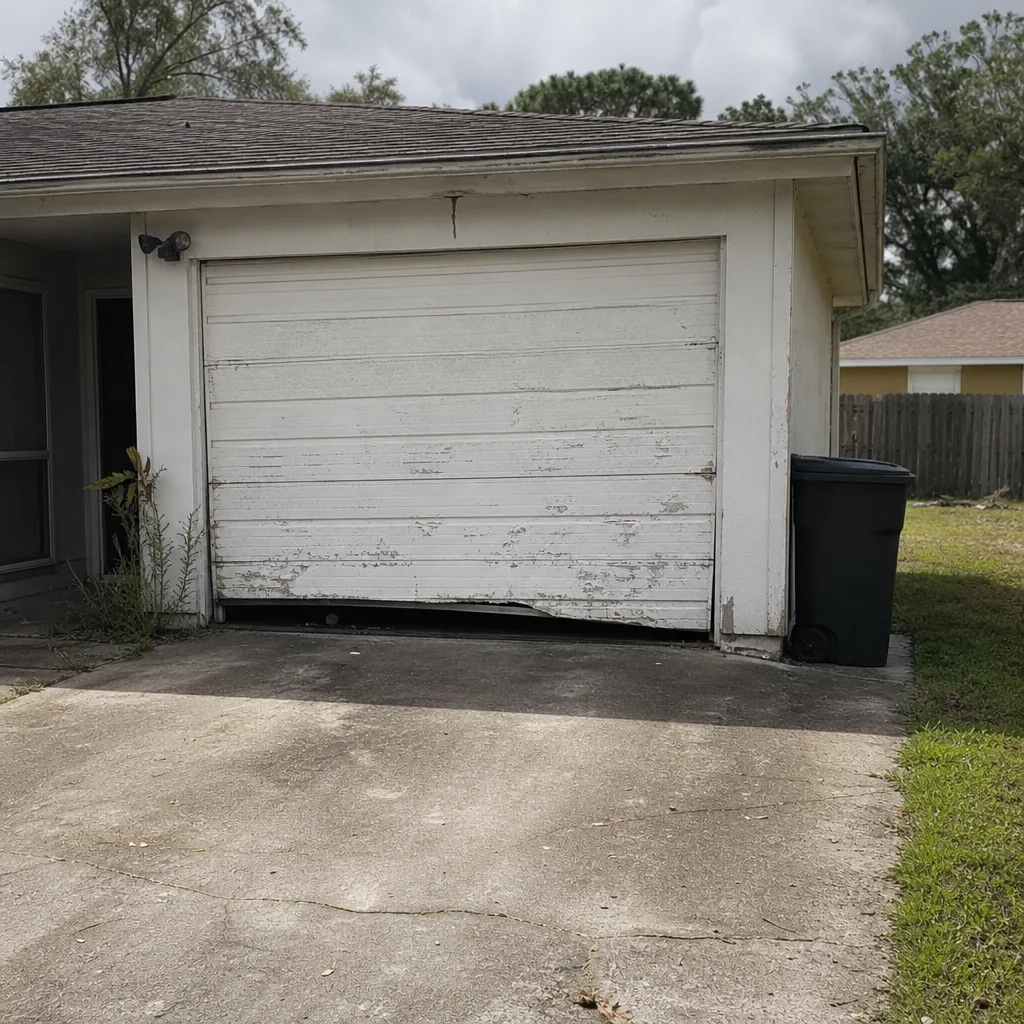 Before
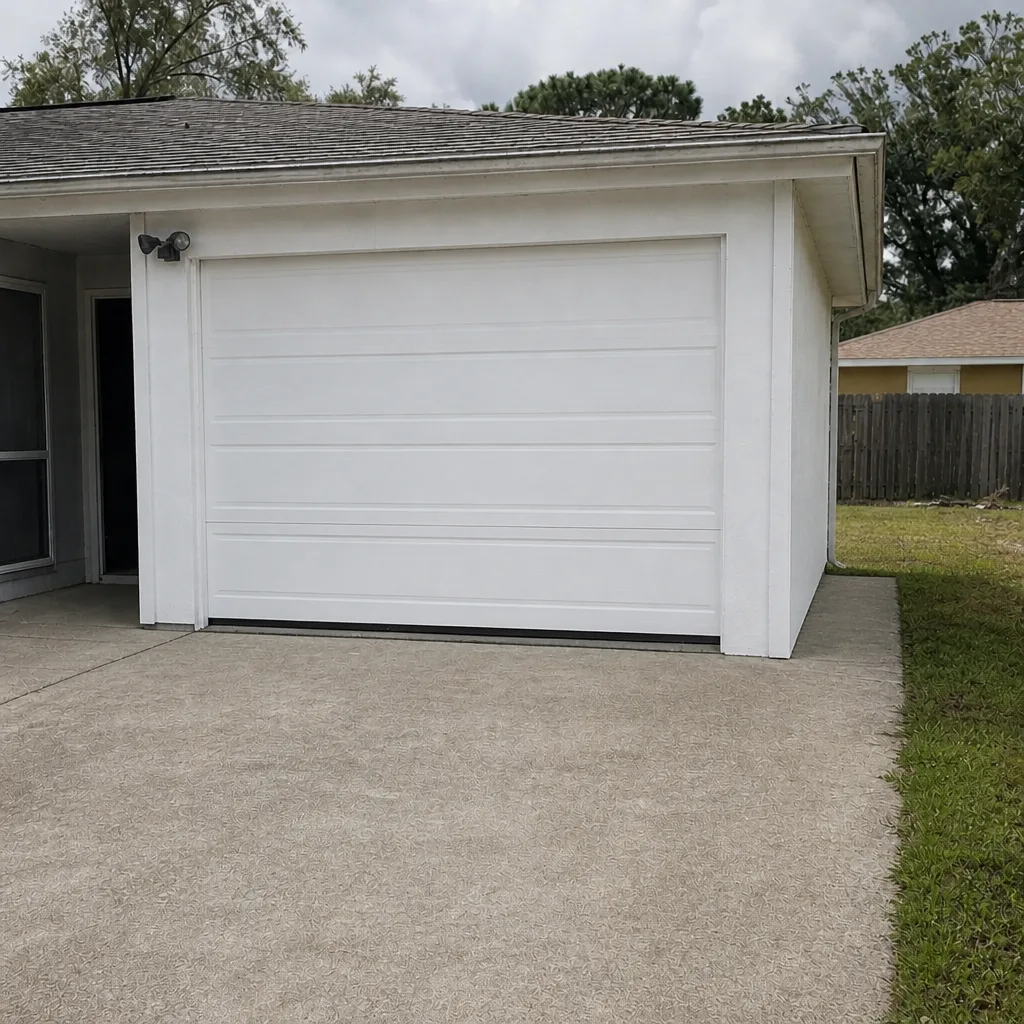 After
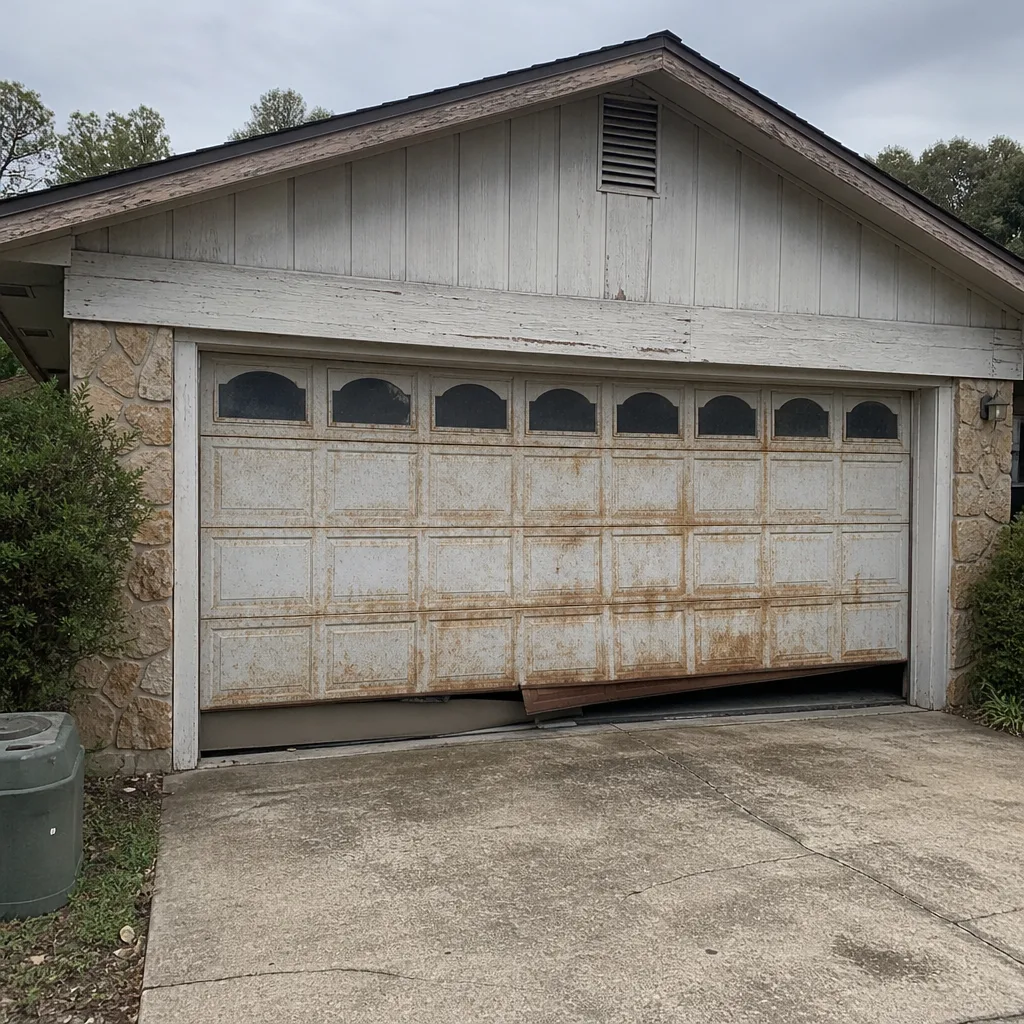 Before
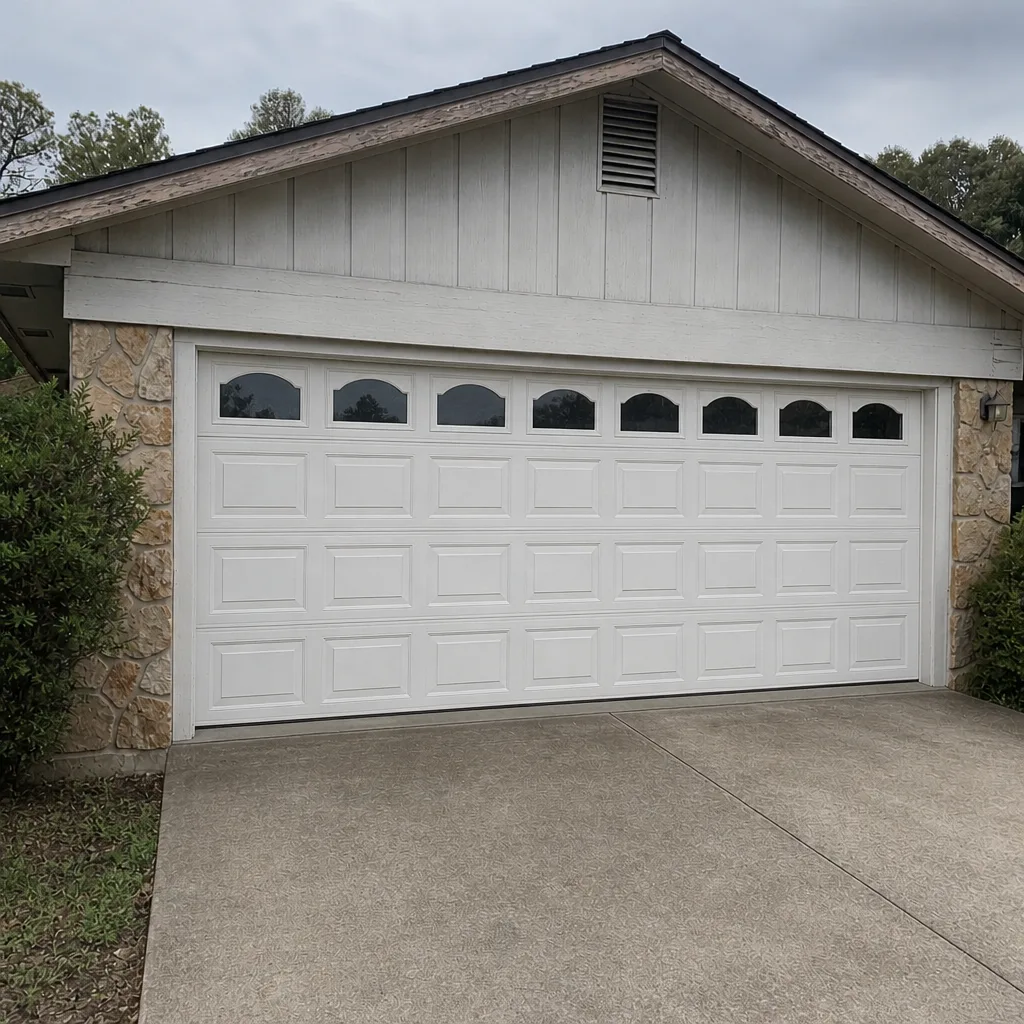 After
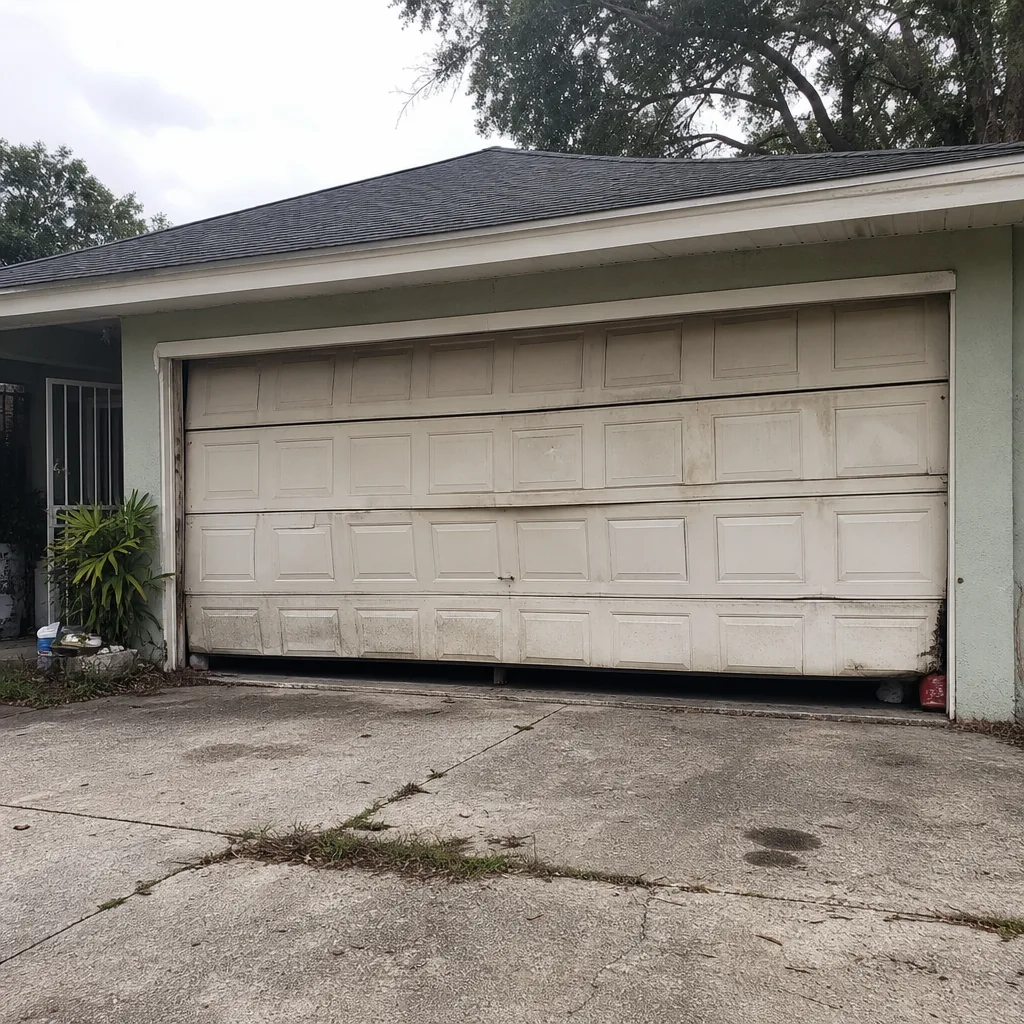 Before
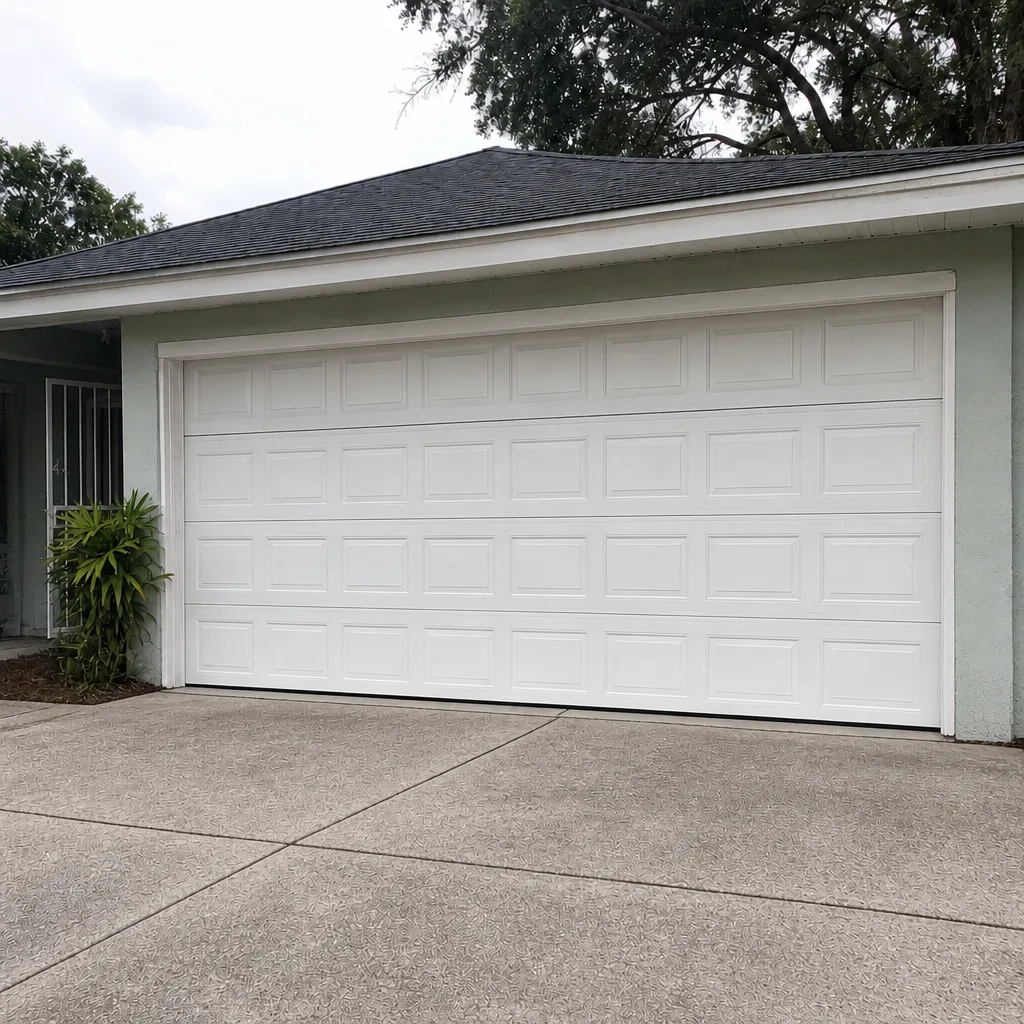 After
When to Call a Professional
Some failures announce themselves clearly, and some hide behind a noise you’ve gotten used to. Call a professional when a spring looks bent, rusted through, or has snapped; when the door won’t stay balanced with the opener disconnected; when you hear a cable snap or see a frayed cable; when the door comes down crooked, or jumps off the track; when the opener grinds, hums without moving, or reverses on its own; or when a photo-eye sensor won’t re-align after basic troubleshooting. Any of these is a same-day or emergency call, because driving a failing door strains it further. Pine Hills Garage Door Repair Co provides same-day and emergency service across Pine Hills for exactly these situations. We offer free estimates in Pine Hills: call (844) 443-3644 and we’ll book the right technician for your brand.
Frequently Asked Questions
Lubricate the moving parts once a month during the hot season and every other month in cooler weather.
Heat expansion wears hinges and rollers faster here than in a cooler climate, so the northern twice-a-year rule is too little. Springs and hinges get the monthly wipe-down regardless. If you hear squeaking that wasn’t there last month, lubricate early and check the rollers.
No. Spring replacement is the one maintenance task homeowners should never attempt. A torsion spring is under extreme tension even when the door is closed, and releasing or adjusting it without the right tools and training can cause serious injury. This is a job for a trained technician. Call (844) 443-3644 for spring repair.
Place a small firm object in the door’s path, close the door with the wall button or remote, and confirm the door reverses on contact. Stand clear of the door while testing. If it doesn’t reverse, stop using it and call for service. Also test the photo-eye sensors by waving a hand in front of each; the door shouldn’t close if one is blocked.
A door that reverses on its own usually has a misaligned or dirty photo-eye sensor, or the opener’s travel limit is out of adjustment. Start by checking the sensor alignment and clearing any obstruction. If it keeps happening, that’s a call for opener repair rather than a reset. In Pine Hills, sun exposure on a sensor lens is a common cause.
A month before the rainy season is due. Replacing a worn bottom seal or side jamb after the first storm is too late to keep your garage dry. Inspect the seals, replace any that are cracked or hardened, and recheck the threshold so the seal sits flush against the floor.
It matters for the small details: the tension on a chain, the pairing sequence for a remote, the sensor wiring. LiftMaster, Chamberlain, Genie, Clopay, Amarr, Wayne Dalton, Craftsman, and Raynor all have their own quirks. If a repair comes up, tell us the brand so we bring the right knowledge to the call. Call (844) 443-3644 for a free estimate on any brand we service.
The Bottom Line
Most garage door maintenance checklists are written for a colder place. Here, rust from year-round humidity is the top cause of premature spring failure, and a monthly wipe-down is the single most effective thing you can do. Lubricate on a heat-adjusted schedule. Test the safety reverse and photo-eyes every month. Check weatherstripping a month before the rainy season. Do the homeowner tasks and leave springs, cables, and opener internals to a technician. Stick to that, and your door fails less often and lasts longer. When something does go wrong, we’re a call away.
Whether it’s routine service or an urgent breakdown, one call handles it. Pine Hills Garage Door Repair Co services every major brand, from LiftMaster and Chamberlain to Clopay and Wayne Dalton, with technicians who know your specific system. For a free estimate in Pine Hills, call (844) 443-3644. We answer same-day and emergency calls, and we’ll confirm the price with you before any work starts.
Written by the team at Pine Hills Garage Door Repair Co.