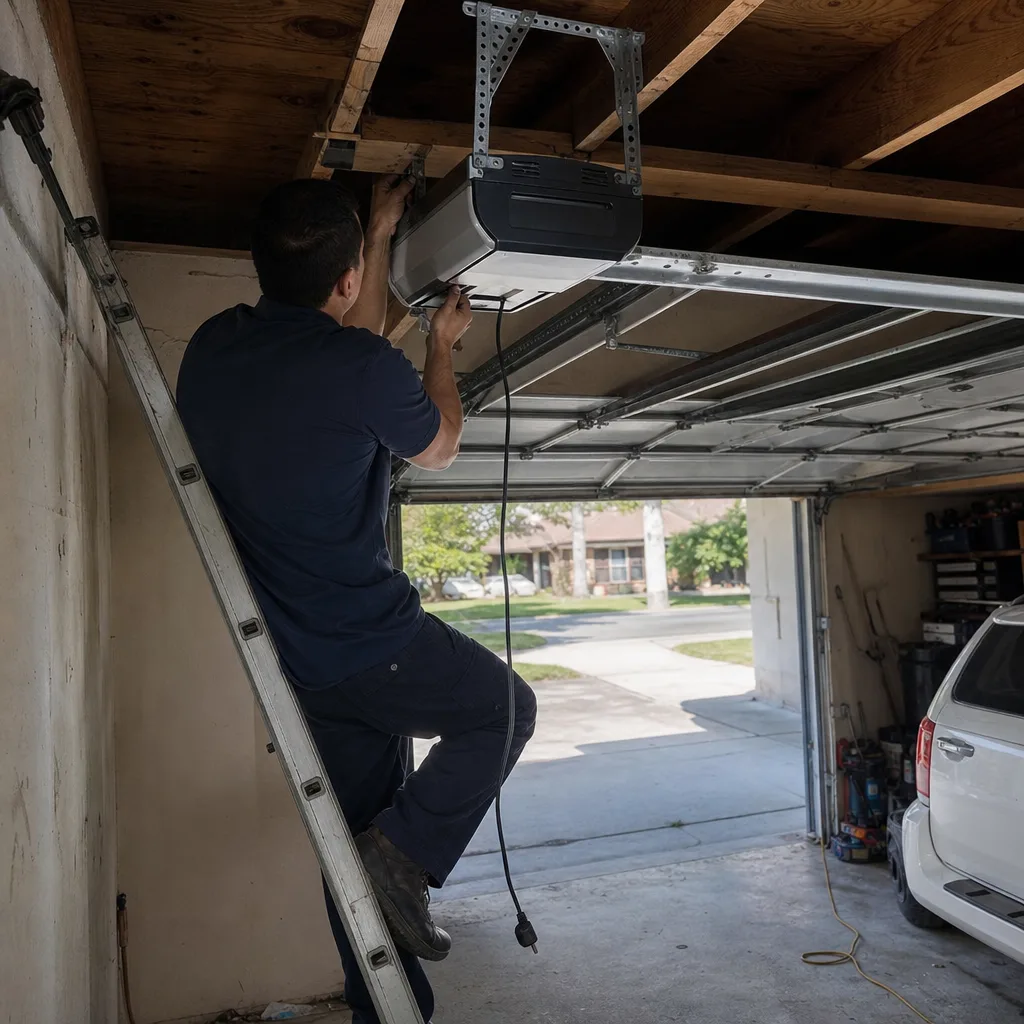
Last updated November 21, 2026
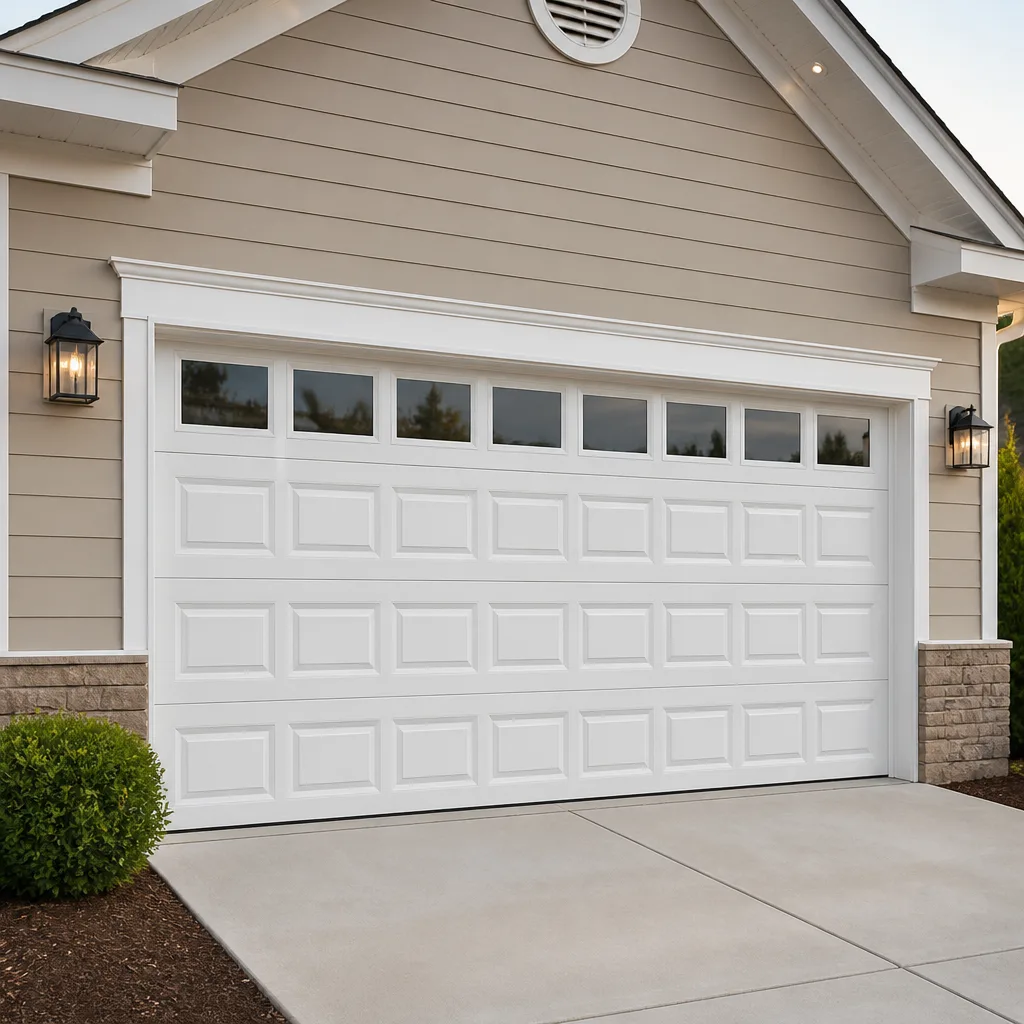 Raised-panel steel
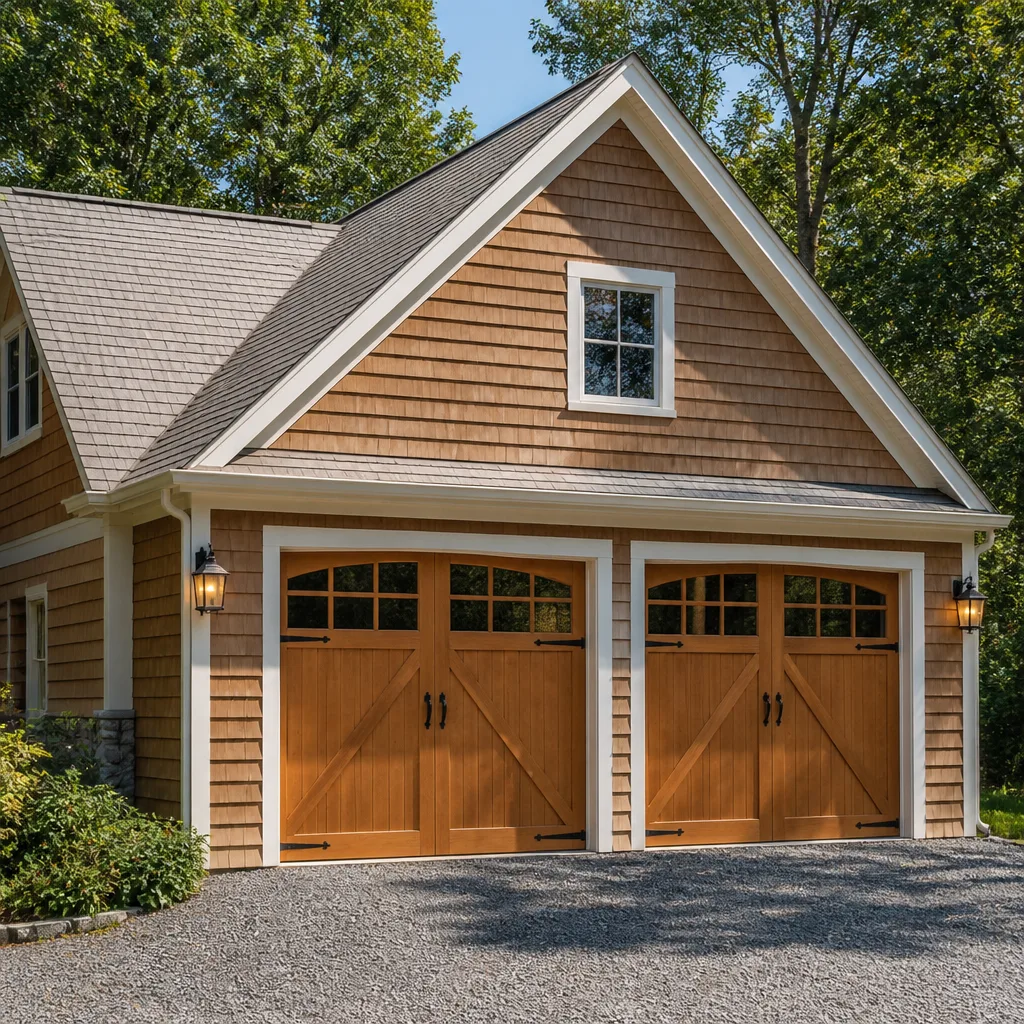 Carriage house
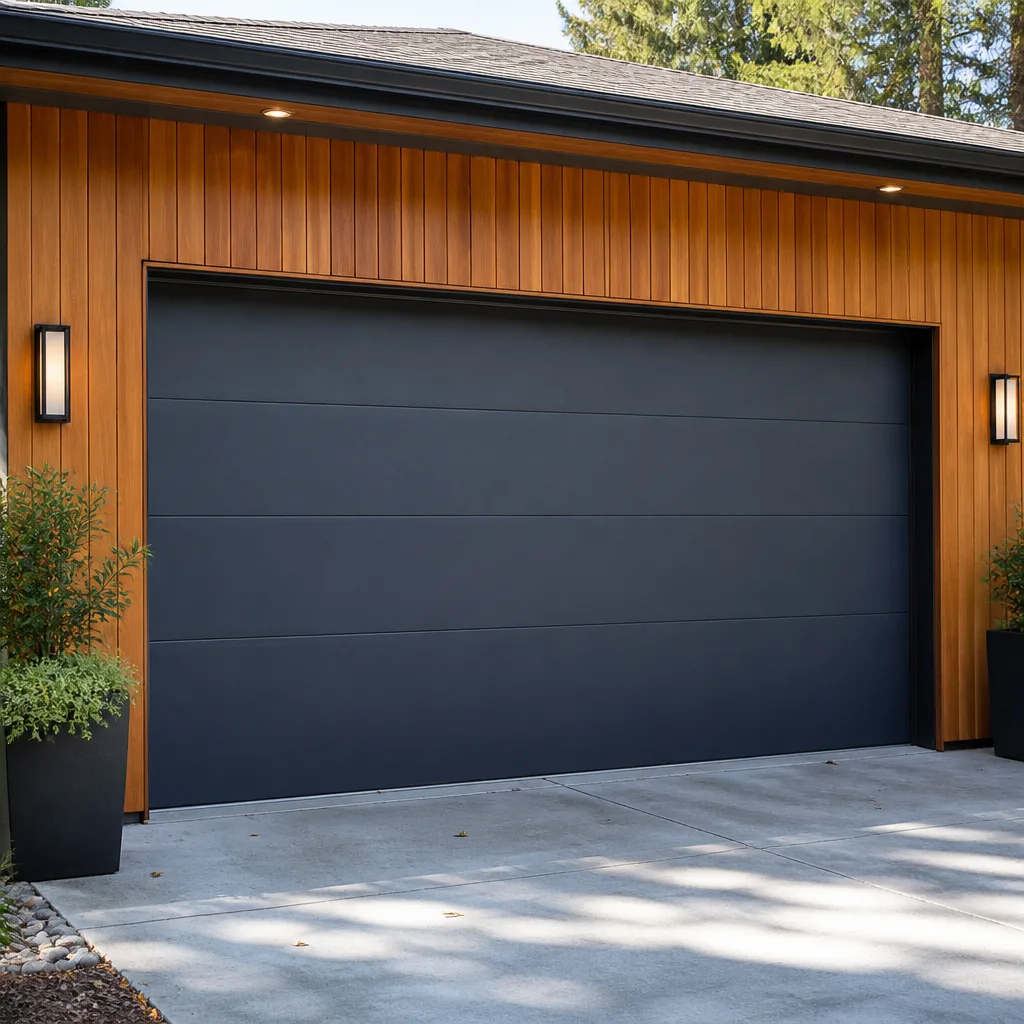 Modern flush
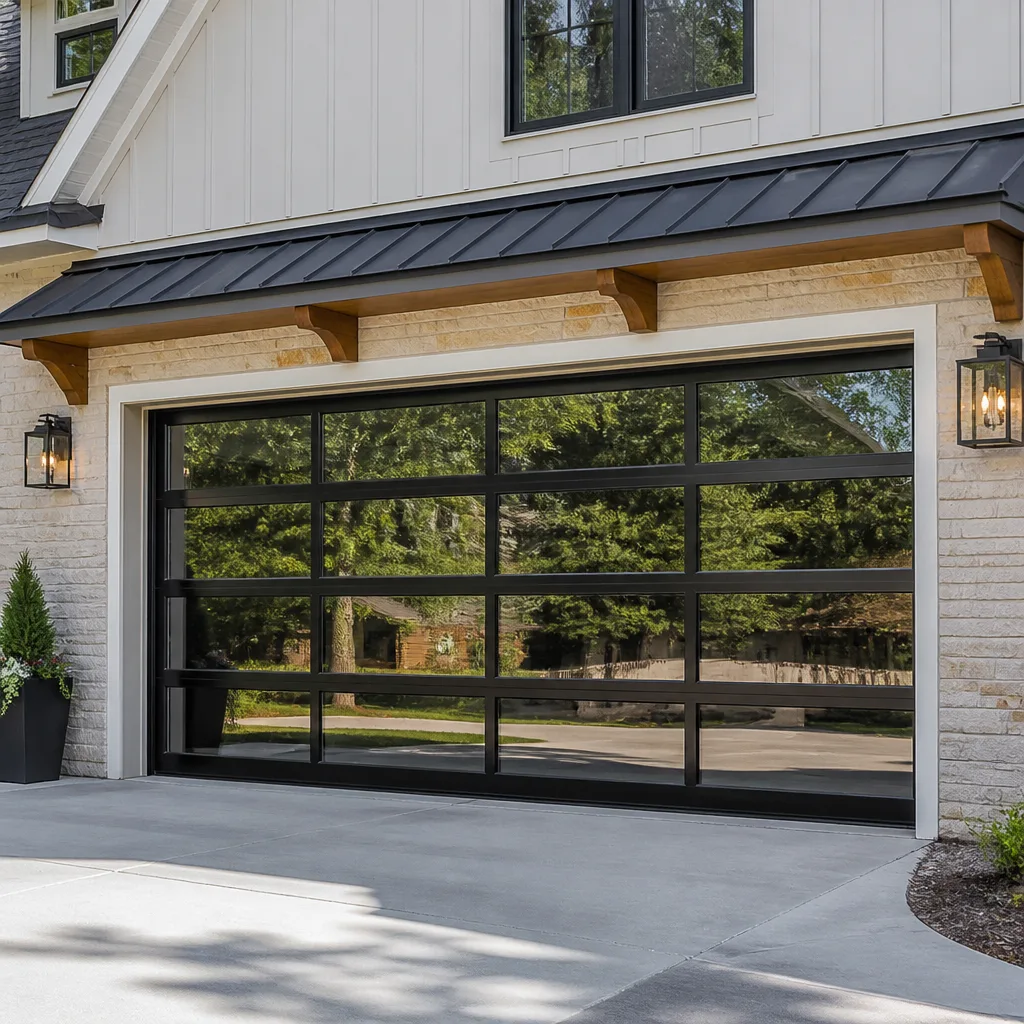 Full-view glass
 LiftMaster openers
 Chamberlain openers
Full 25-point door and opener safety check with every visit - springs, cables, rollers, tracks, and your LiftMaster or Chamberlain opener included
You get a price before we start. It does not change when the pro arrives.
Get your free estimateGarage Door Warning Signs: A Pine Hills Homeowner’s Reference Guide
Most garage door failures don’t announce themselves. They whisper first. A door that pauses for a half-second longer than it used to, a faint metallic scrape near the top of a track, a remote that needs two presses instead of one – these are the early signals that separate a quick repair from a much bigger problem downstream. Homeowners in Pine Hills often read these sounds as normal wear, and that’s the misunderstanding this guide exists to correct. A door rarely stops working out of nowhere; it telegraphs trouble weeks in advance. Below we break down exactly what to listen for, what to watch for, and what each symptom points to mechanically, so you can act while the fix is still small.
Quick Answer
The main warning signs of garage door trouble are unusual noises (grinding, squeaking, popping), uneven or hesitant door movement, visible rust or fraying on springs and cables, and an opener that struggles or reverses unexpectedly. Catching any one of these early usually means a simple adjustment or part replacement rather than a full spring or door failure. In Pine Hills, the humidity-driven rust patterns and frequent daily use make regular visual checks especially worthwhile.
Styles & brands we work with
- Raised-panel steel
- Carriage house
- Modern flush
- Full-view glass
- LiftMaster openers
- Chamberlain openers
Table of Contents
- Auditory Warning Signs Decoded: What Each Sound Means
- Visual Cues: Rust That’s Cosmetic vs. Rust That Signals Failure
- Behavioral Signs: How the Door Moves Tells You a Lot
- Opener Warning Signs Homeowners Misread
- The 60-Second Weekly Inspection Routine
- What Repairs Typically Cost in the Pine Hills Market
- Common Mistakes to Avoid
- When to Call a Professional
- Frequently Asked Questions
Auditory Warning Signs Decoded: What Each Sound Means
A garage door is a mechanical system with a limited vocabulary, and every noise it makes maps to a specific component. Learning to tell the sounds apart is the single fastest way for a Pine Hills homeowner to know whether they’re facing a five-minute adjustment or a repair that needs a trained technician. Here’s how we mentally sort the noise complaints we hear most.
Grinding
Grinding almost always comes from metal-to-metal contact somewhere in the travel path. The usual suspects are dry rollers, a bent track, or a torsion spring that has begun to fail internally. If the grind is rhythmic and repeats at the same point in the door’s travel, it’s a mechanical obstruction. If it’s constant and coarse, the rollers or the spring are the likely source. Grinding gets worse fast and shouldn’t be ignored.
Squeaking and squealing
Squeaking is the friendly one. It usually means a hinge, roller, or track that needs lubrication, or a fastener that has worked slightly loose. Left alone, squeaking turns into grinding, and grinding turns into a snapped spring or a dropped door. A dry hinge is cheap to fix. A broken torsion spring is not, and it’s the kind of high-tension failure that should only be handled by trained hands – please don’t try to adjust, unwind, or replace a spring yourself.
Popping and snapping
A single sharp pop followed by a door that suddenly feels extremely heavy usually means a torsion spring has broken. Repeated popping during travel can indicate a cable that has jumped its drum. Both are safety-critical situations. If your door drops fast or won’t lift at all after a pop, stop operating it and call us – this is exactly the scenario that our garage door spring repair service is built around.
Rattling
Rattling is usually a loose bolt, a worn hinge, or a decorative hardware piece that has come loose. It’s the least urgent of the four sounds but the easiest to fix early before a fastener backs out completely and the door starts to wobble in its tracks.
Visual Cues: Rust That’s Cosmetic vs. Rust That Signals Failure
In Pine Hills, rust is a year-round conversation. The humidity and summer rain don’t cause garage doors to rot the way a northern winter would, but they do encourage surface oxidation on any unpainted steel hardware. The trick is separating the rust you can ignore from the rust that warns you of an imminent failure – and the difference is almost always about location, not amount.
Harmless surface rust
Thin orange-brown dusting on the bottom panel, on the interior steel, or on bolts and hinge plates is common and rarely serious. It forms where moisture lingers after a rain, typically along the lowest edge of the door. Wiping it and repainting or oiling the hardware is usually enough to stop it. If the door still runs smoothly and the paint isn’t peeling in sheets, this rust is cosmetic.
Warning-level rust
Rust on the torsion spring itself is a different animal. Surface rust on a spring can indicate the steel has lost some of its elasticity, and that’s the substrate for a snap. Rust that has crept into the coil wire, into a cable end, or into the bottom bracket plate is a signal to have the hardware inspected. The same goes for rust streaks trailing down from a spring – that means the coil has started to shed metal.
What else to scan for
- Frayed, kinked, or rusted-through lift cables – these carry tension and should be replaced before they break.
- Rollers with flat spots, cracks, or missing ball bearings.
- Bent or dented panels where a track meets the door – a bent track will eventually force the door off its rollers.
- Loose hinges and brackets – grab each by hand and give it a slight tug; anything that shifts needs tightening.
- The bottom seal – cracked or missing rubber lets water in and can be a sign the door has dropped slightly out of level.
Behavioral Signs: How the Door Moves Tells You a Lot
Watch your door do a full open-close cycle once. Slow motion is a diagnostic tool. The door’s behavior in transit – how it starts, how it pauses, how it travels – points to a specific component almost every time. Homeowners in Pine Hills who live close to the door tend to notice this before anything else, even when they can’t yet name the problem.
Slowness
A door that opens or closes noticeably slower than it used to is usually fighting excess friction. Dry rollers, a misaligned track, or an opener that’s losing torque are the leading causes. If the slowdown is gradual across a few weeks, it’s probably mechanical wear. If it happened suddenly, look to the opener or a bound track.
Hesitation at the start
A short pause before the door begins moving is often a sensor alignment problem – the safety sensors at the base of the door aren’t handshaking cleanly, so the opener takes a beat longer to arm. This is one of those fixes that’s far cheaper to correct now than after the opener’s logic board starts compensating and stresses other parts. Hesitation that has progressed to a momentary reversal followed by a second attempt is a clearer signal the sensors need attention.
Uneven travel
A door that sags on one side, tips during travel, or comes down harder on one corner than the other is almost always a spring tension problem, a stretched cable, or a bent track. Uneven travel is the leading cause of “the door came down crooked and jammed” calls. Get it looked at while the door still runs.
Full reversal or refusal to close
If the door goes up fine but reverses on the way down, the sensors are the first thing to check. If it refuses to move in either direction but the opener clicks or hums, the opener may have lost its drive gear or the door may be locked to its track. Any of these calls are typical of the garage door repair work we handle around Pine Hills, and most can be resolved in a single visit.
Opener Warning Signs Homeowners Misread
A great many “my door is broken” calls turn out to be the opener, not the door. The opener sits above your head doing two jobs at once – driving the door and monitoring the safety sensors – so when it starts to fail, the symptom often shows up at the door. Here’s how to tell if the problem originates at the opener itself.
The door reverses without an obstruction
If the door reverses the instant it starts to close and there’s nothing in the path, the most common culprit is a dirty or misaligned safety sensor at the base of the track. Two photo-eye lenses sit facing each other, and dust, a cobweb, a shifted bracket, or sun glare can break the beam. The fix is often a wipe-down and a realignment.
The opener clicks but the door doesn’t move
A single click or a hum with no movement usually means the opener’s drive gear has stripped, or the trolley has disconnected from the J-arm. If the door is heavy to lift by hand (with the opener disengaged), it’s a door-spring problem that’s now straining the opener. If it moves freely by hand, it’s the opener.
The remote works sometimes
Intermittent remote performance is the opener’s most misdiagnosed symptom. It’s usually a battery, a WiFi or LED bulb interference issue near the opener head, or a worn wall button. If the wall-mounted button works reliably but the remote doesn’t, the door itself is fine – it’s the opener’s radio receiver or the remote.
The door only opens partway
Partial opening is often a travel-limit setting that has drifted, or a door that has become heavy enough that the opener’s force settings trip. Force settings exist to protect the motor, and resetting them without fixing the underlying weight problem just masks the real issue. That’s where an experienced technician with the right garage door opener repair background matters – a LiftMaster or Chamberlain unit has specific diagnostic patterns that a brand-familiar technician reads instantly.
The 60-Second Weekly Inspection Routine
This is the part we wish every Pine Hills homeowner built into their week. Once a week – pick a day and stick to it – run through the following in order. Twelve months of this habit catches the vast majority of garage door problems before they turn into failures.
- Listen to the full cycle. Open and close the door once with no other noise in the garage. Note any grinding, squeak, pop, or rattle. New sounds matter more than familiar ones.
- Watch the door travel. Look for hesitation, uneven movement, or a door that pauses in one spot. Follow it all the way up and all the way down.
- Scan the springs and cables. With the door closed, look at the torsion spring (the coil above the door) or the extension springs (the pair running along the sides) for new rust, kinks, or a visible gap. Don’t touch or adjust – just look.
- Test the safety sensors. Break the beam with your foot and confirm the door reverses. Wipe the lenses if they look dusty.
- Check the bottom seal and threshold. Confirm the rubber makes contact across the width of the opening with no visible gap or curled edge.
- Try a manual lift once a month. With the opener disengaged, lift the door partway by hand. It should feel balanced and light. If it’s noticeably heavier than before, the springs or cables are losing tension.
That’s six checks, most of them visual, and it takes about a minute once you’re used to it. The point isn’t to become a mechanic – it’s to know what’s normal so the abnormal stands out. For a deeper dive into the specific repair procedures behind each symptom, Pine Hills Garage Door Repair Co walks through the service side on our main page.
What Repairs Typically Cost in the Pine Hills Market
One of the most common questions we get from Pine Hills homeowners is simply “what will this cost to fix?” Here’s a general breakdown. These figures are typical estimates for the Pine Hills area, not quotes. The written estimate we provide before any work starts is the number you’ll pay – no surprises, no additions after the fact.
- Lubrication, adjustment, and tune-up: $90-$160. This is the “grinding and squeaking” fix and it heads off most of the more expensive repairs below.
- Roller and hinge replacement: $100-$200 depending on how many are worn and whether the door is a two-car or single-car size.
- Safety sensor alignment or replacement: $80-$150. The classic “it reverses on its own” call.
- Opener repair or diagnostic: $120-$250 for a repair; a full opener replacement usually runs $350-$650 including the unit and installation.
- Torsion spring replacement (one spring): $180-$340. Matched pairs are usually replaced together, so a pair runs about twice that – expect the pair quote to be roughly double the single-spring range.
- Extension spring replacement (pair): $120-$260.
- Cable replacement: $150-$280 per side.
- Track straightening or replacement: $150-$300 depending on the affected section.
- Full door replacement: $900-$2,600 including the door and installation, dependent on size, material, and insulation.
Costs go up quickly when a warning sign is ignored. A $100 tune-up that catches a dry roller is always cheaper than a $340 spring replacement that could have been avoided. The written quote we provide before work starts locks the price – you’ll never get an invoice for a number you didn’t agree to.
See the difference
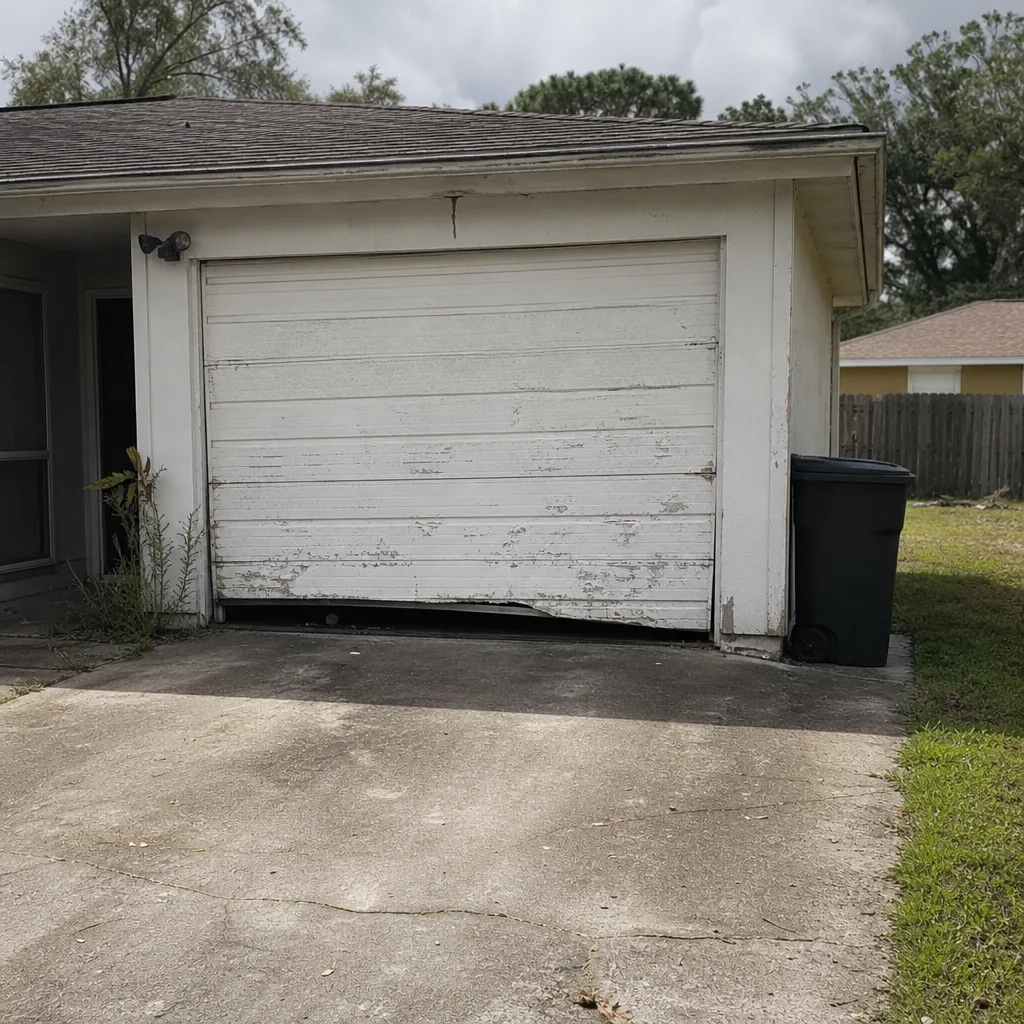 Before
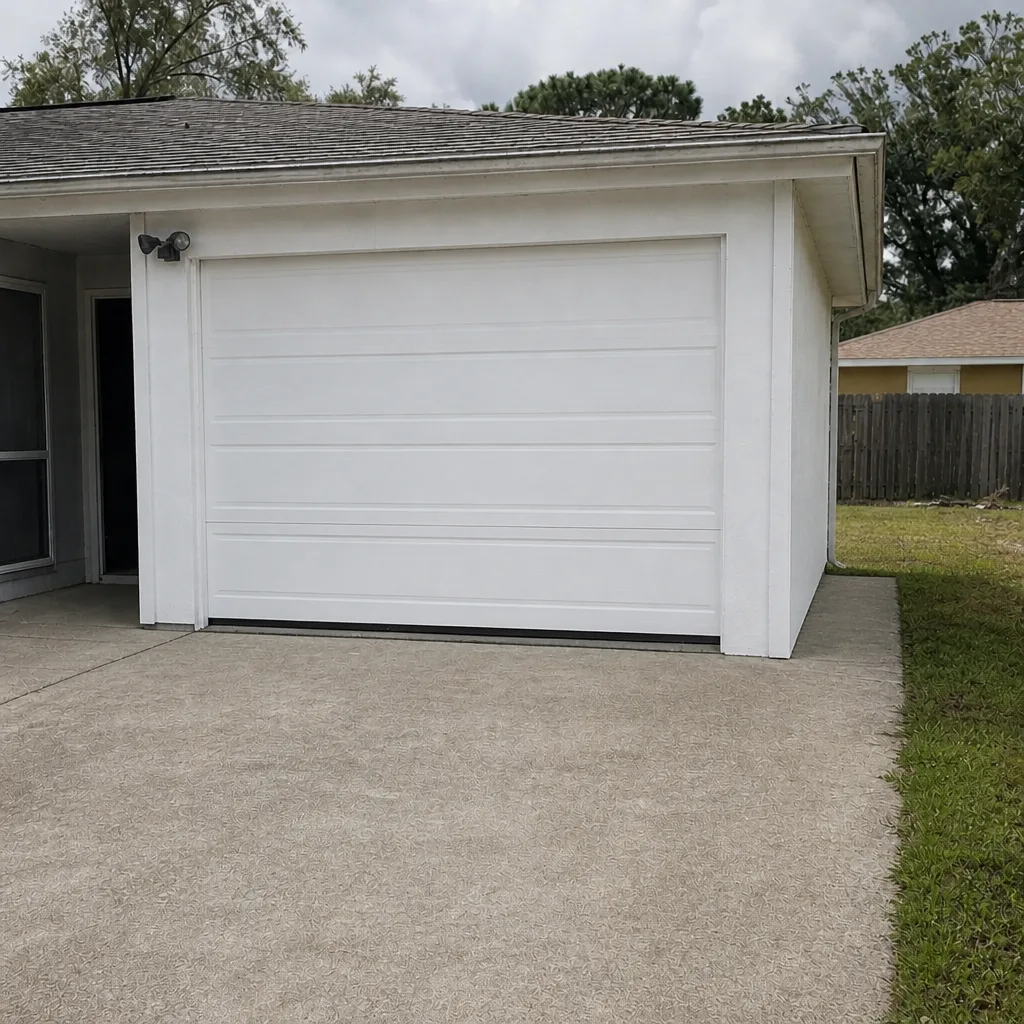 After
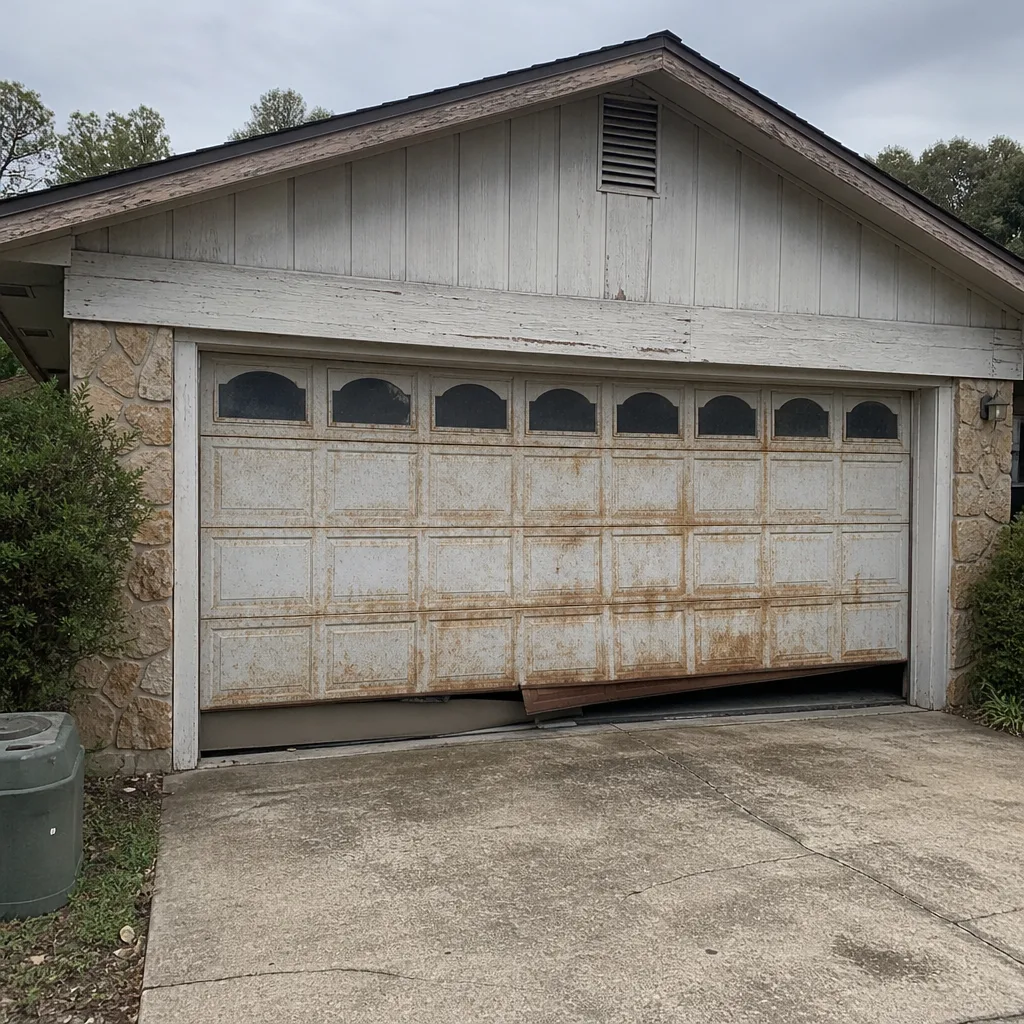 Before
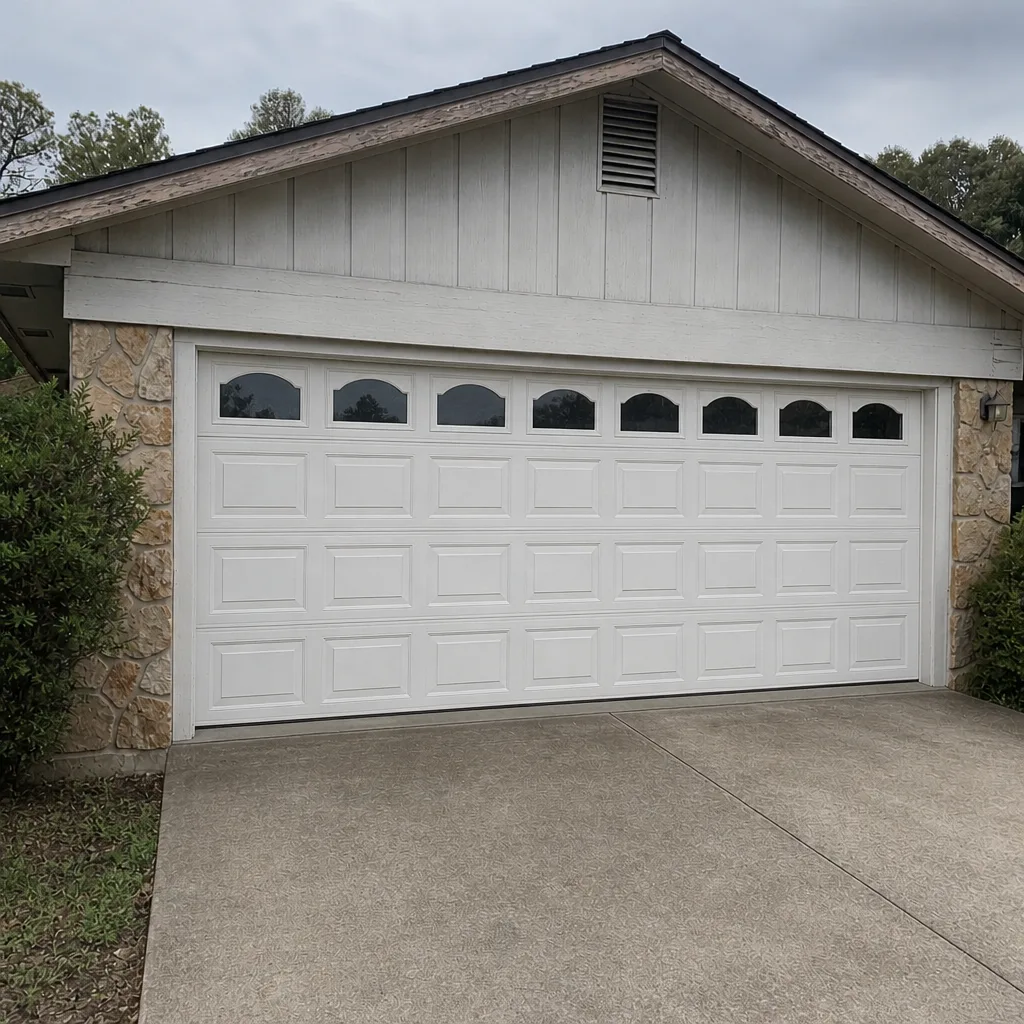 After
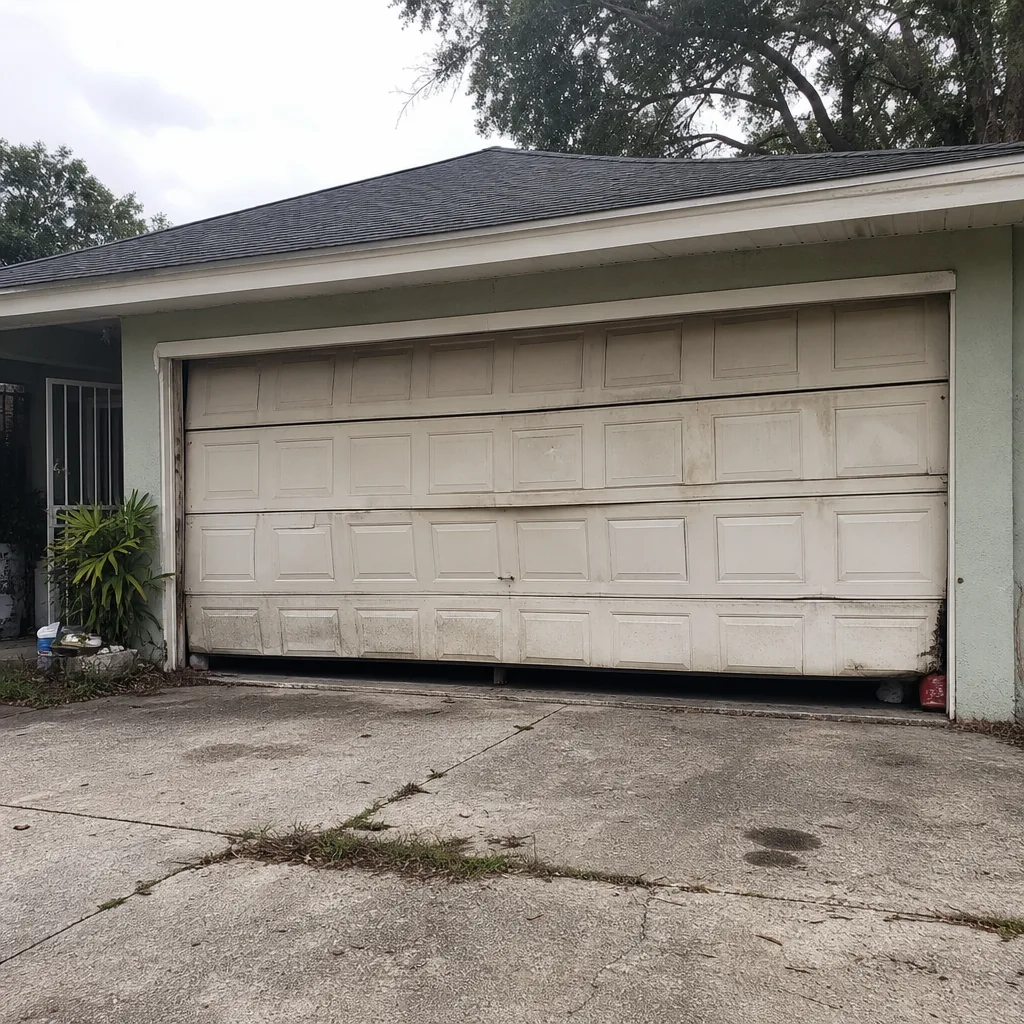 Before
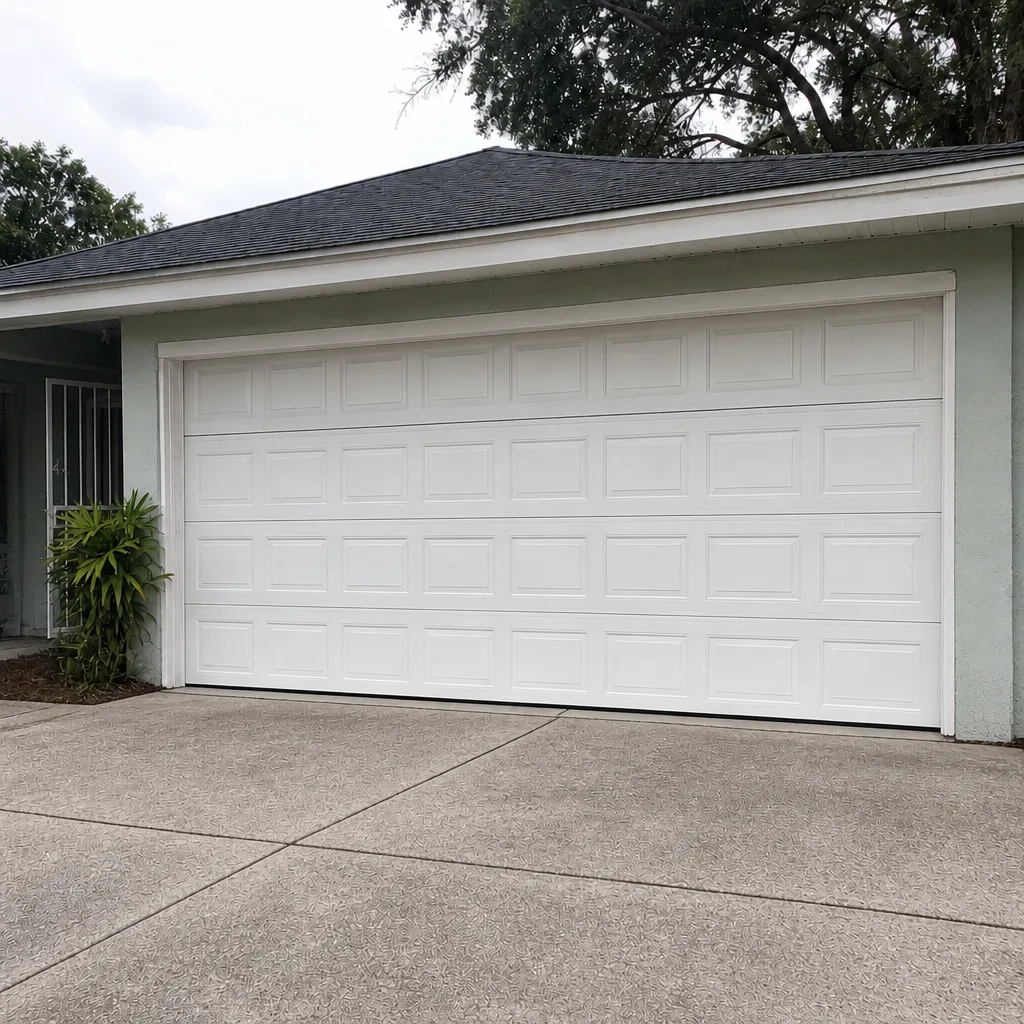 After
Common Mistakes to Avoid
- Treating every squeak as a reason to replace the door. More often than not, noise is a lubrication or hardware-tightening issue. Ask for a diagnostic first, not a replacement quote.
- Trying to adjust a torsion spring yourself. Torsion springs are under extreme tension even when the door is closed. This is not a DIY job, and getting it wrong can cause serious injury. Leave it to a trained technician.
- Ignoring a door that reverses. A reversing door is a safety feature doing its job, but the underlying sensor problem should be fixed promptly. Pine Hills garages often sit closed for hours in the heat, and a falsely reversing door can be a significant inconvenience to a family coming and going.
- Resetting the opener’s force limits to “make it work.” Cranking up the force setting on a heavy door stresses the motor and the hardware. Fix the weight or friction issue, then reset.
- Overlooking rust on the spring before the bottom panel. Bottom-panel rust is cosmetic. Spring rust is not. Prioritize accordingly.
- Skipping the manual-lift test. Most homeowners never lift their door by hand, so they never notice the slow weight gain that signals a weakening spring. One test a month is enough.
- Assuming a remote issue is a door issue. If the wall button works reliably and the remote doesn’t, the door is fine – the opener’s receiver or the remote itself needs attention.
When to Call a Professional
Some fixes are worth handing to a technician straight away. If you hear a pop followed by a door that won’t lift, see a broken spring or a frayed cable, notice the door is off its track, or smell burning near the opener, stop operating it and call. A door that reverses without obstruction, sags on one side, or feels much heavier than usual is also a call-worthy sign. And if a routine inspection turns up rust on the spring coil itself, that’s a good time to get a professional opinion. Pine Hills Garage Door Repair Co offers free estimates in Pine Hills – call (844) 443-3644 to schedule a diagnostic and find out what’s actually wrong before you commit to any repair.
Frequently Asked Questions
In our experience, the most common early warning sign is a squeak or grind that develops in a hinge or roller. Pine Hills humidity accelerates surface oxidation on any unpainted hardware, so annual lubrication and gentle adjustment go a long way. Call (844) 443-3644 for a free estimate if a new sound shows up.
Not always, but it’s the first thing we check. A single sharp pop followed by a door that suddenly feels extremely heavy usually means a torsion spring has broken. If it’s a repeating pop during travel, it can be a cable that has jumped its drum. Either way, stop operating the door and call – (844) 443-3644 gets you a technician who can diagnose it.
Once a week is ideal, and the routine above takes about 60 seconds. Monthly at minimum. Pine Hills doors tend to run daily and the humidity means hardware needs attention more often than in a drier climate. A quick scan for rust, a listen during one open-close cycle, and a check of the safety sensors catches the vast majority of problems early.
Some reversing issues are as simple as wiping the safety sensors or a remote battery change. But if you’re dealing with springs, cables, or the door off its track, please don’t attempt the repair yourself. Those are high-tension components that can cause serious injury. Call (844) 443-3644 and we’ll take a look – estimates are free.
We work on Genie and Craftsman units alongside LiftMaster, Chamberlain, Clopay, Amarr, Wayne Dalton, and Raynor. Each brand has its own diagnostic patterns for force limits, travel settings, and sensor behavior, and a technician familiar with the specific system saves time and money. Call (844) 443-3644 to schedule a diagnostic.
Yes. Every job starts with a written estimate, and the price in that estimate is what you pay. We won’t begin any work until you’ve reviewed and approved the quote. If something unexpected turns up mid-job, we stop and talk it through before touching anything. Call (844) 443-3644 for a free estimate.
The Bottom Line
The gap between a cheap fix and an expensive repair is almost always a few weeks of ignored signals. A grinding roller, a rusty spring coil, a door that hesitates before closing – each is the door telling you exactly what’s wrong if you know how to read it. Build the 60-second weekly check into your routine. Watch the door’s travel, listen to its sounds, and scan for rust where it counts. If any of the warning signs in this guide shows up, call (844) 443-3644 for a free estimate today. Our technicians have up to 9 years of experience, we work on your brand, and same-day and emergency service is available for urgent situations.
Written by the team at Pine Hills Garage Door Repair Co.