Last updated November 21, 2026
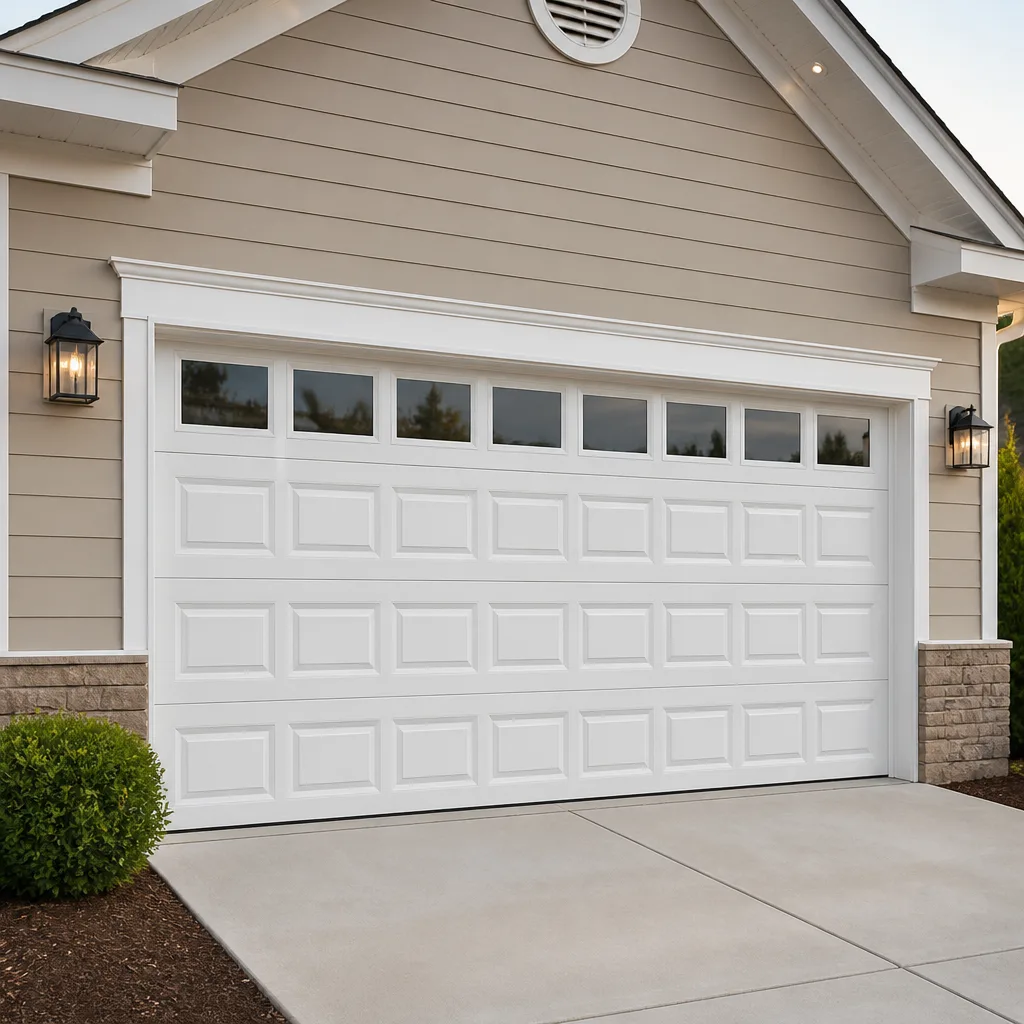 Raised-panel steel
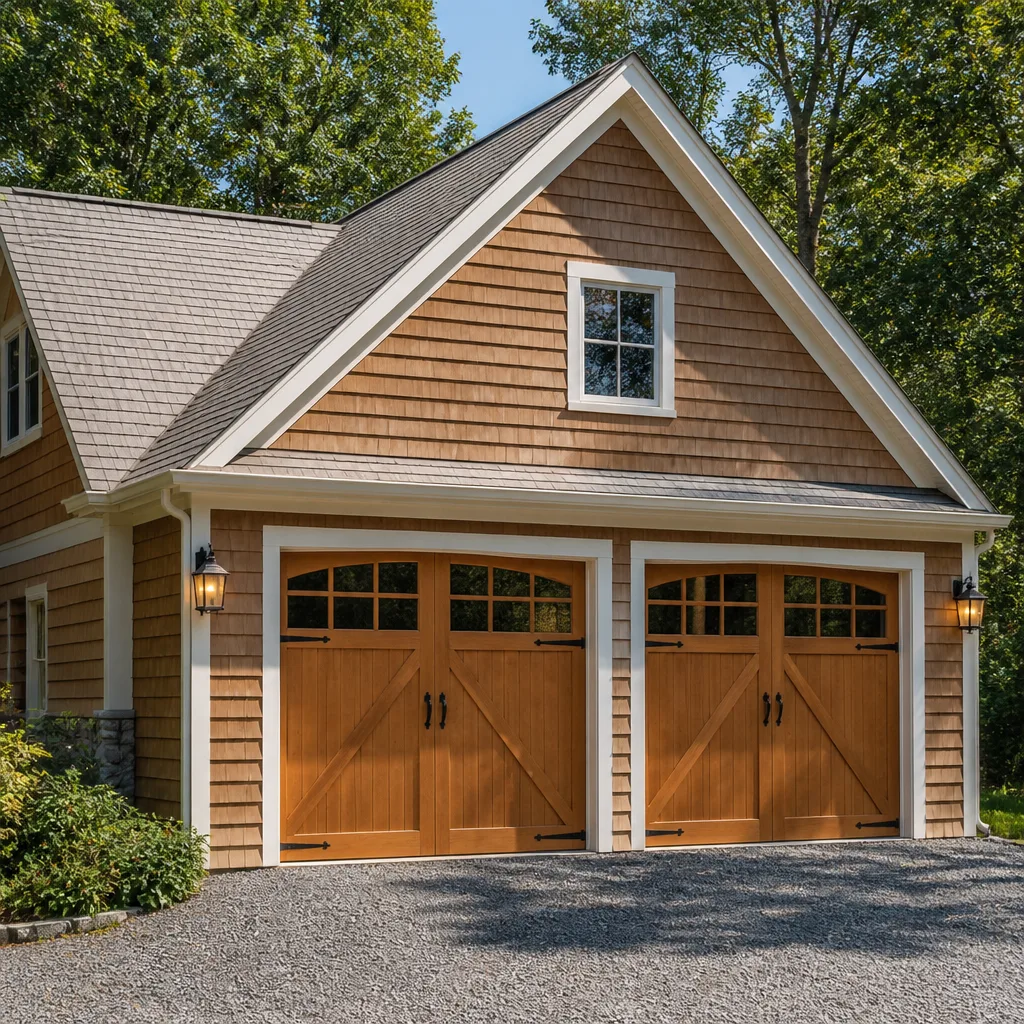 Carriage house
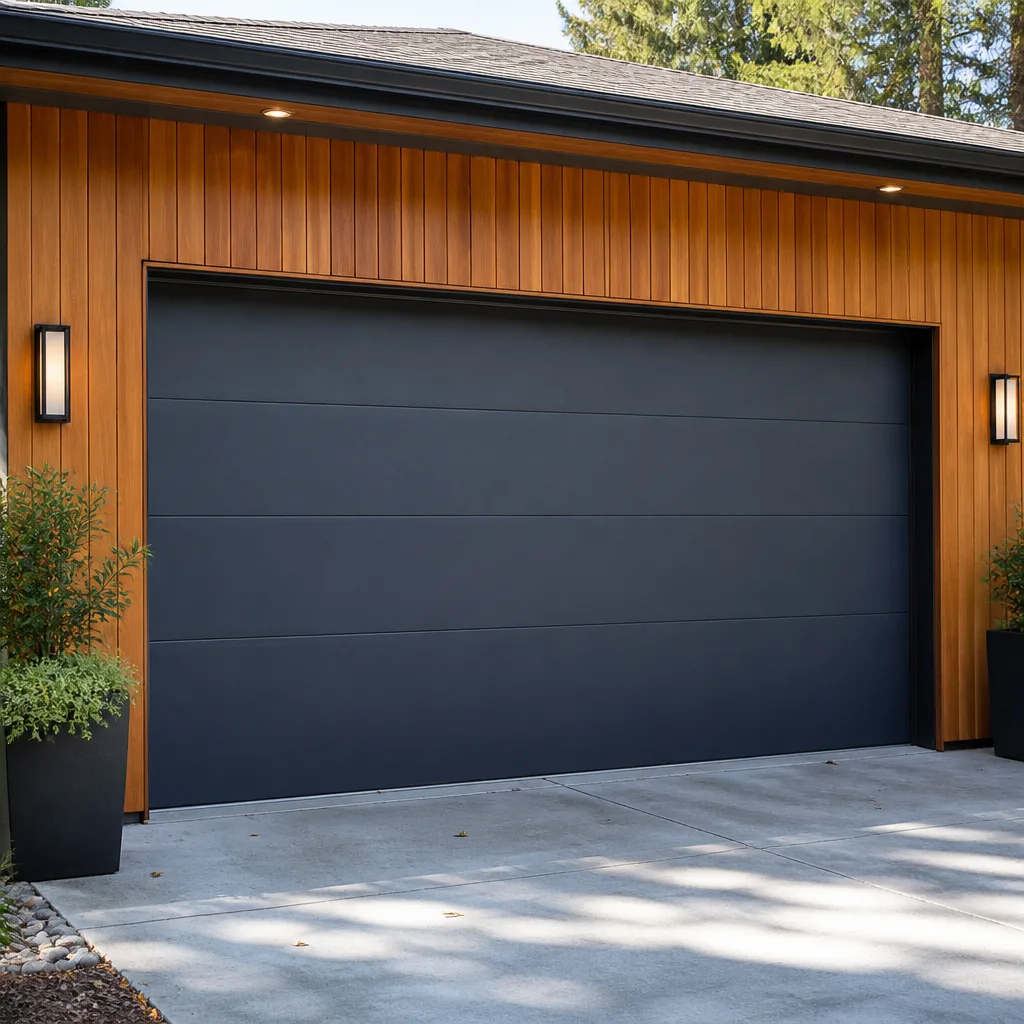 Modern flush
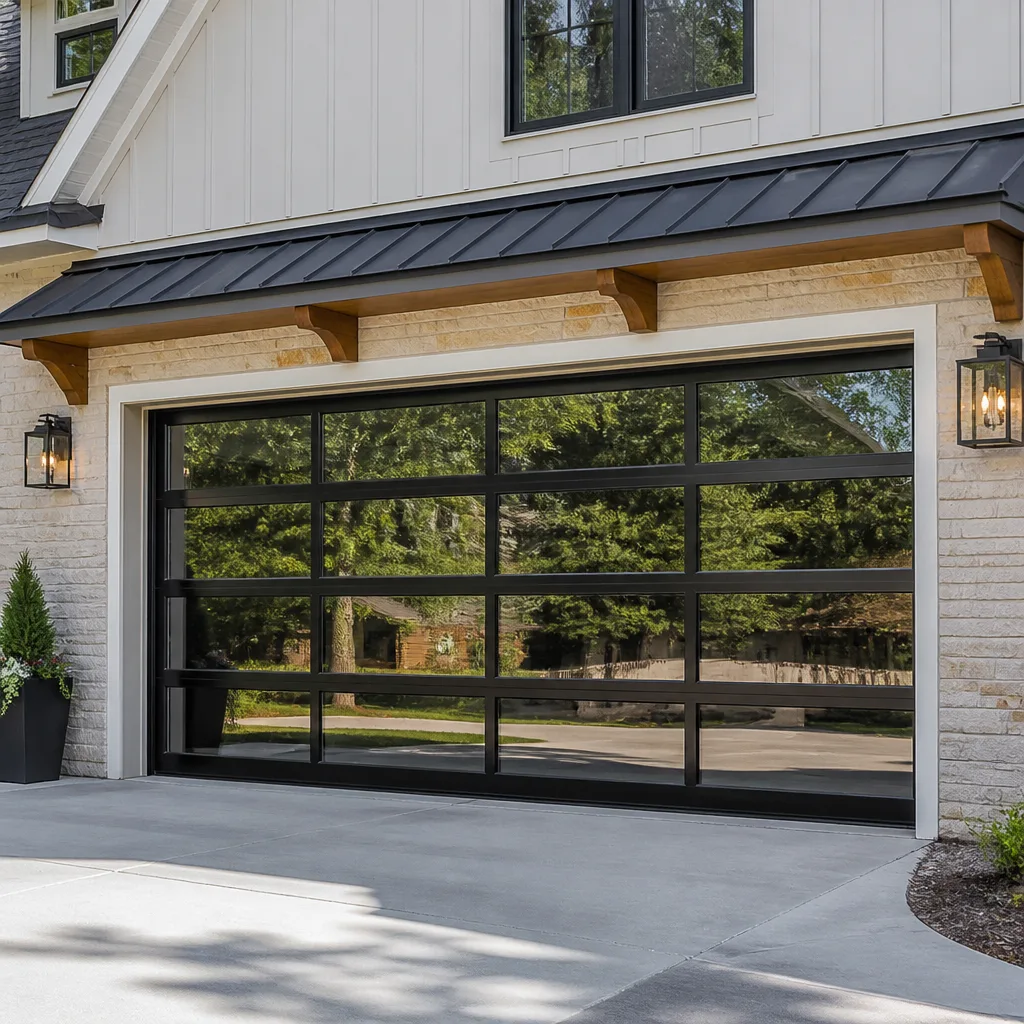 Full-view glass
 LiftMaster openers
 Chamberlain openers
Full 25-point door and opener safety check with every visit - springs, cables, rollers, tracks, and your LiftMaster or Chamberlain opener included
You get a price before we start. It does not change when the pro arrives.
Get your free estimateDIY vs Professional Garage Door: The Pine Hills Homeowner’s Decision Guide
Most advice on garage door DIY gets the question wrong. It treats the whole door as either a friendly weekend project or an untouchable machine that only a pro should ever touch. Neither is true. The real dividing line runs task by task, and it’s set by consequences, not confidence. A torsion spring holds enough stored energy to break a wrist or worse, so no homeowner should be resetting one. Adjusting your door’s travel limit or swapping a safety sensor is genuinely simple, saves you a service call, and carries no meaningful risk. This guide sorts every common garage door job into DIY-safe and always-hire-a-pro, explains the Florida and Orange County rules that close off some work to homeowners entirely, and shows what a DIY mistake actually costs. We’re writing it from Pine Hills, where we work on residential doors every week.
Quick Answer
Do it yourself for the small, low-energy jobs: sensor alignment, travel-limit adjustments, remote and keypad programming, track wiping, and lubricating hinges, rollers and springs. Hire a professional for anything involving torsion springs, cables, bottom brackets, panel replacement, and full door or opener installation, because those carry serious injury risk or need a permit that legally requires a licensed contractor. The dividing line is stored energy and code, not skill.
Styles & brands we work with
- Raised-panel steel
- Carriage house
- Modern flush
- Full-view glass
- LiftMaster openers
- Chamberlain openers
Table of Contents
- Where the Real Line Sits Between DIY and Professional
- The Task-by-Task Table: DIY-Safe vs. Always Hire a Pro
- The Florida Rule That Closes Some Work to Homeowners
- What a DIY Mistake Really Costs
- What “DIY-Friendly” Opener Installation Actually Involves
- The Tool Cost Threshold
- What a Technician Sees That You Won’t
- When to Call a Professional
Where the Real Line Sits Between DIY and Professional
The garage door is the heaviest moving object in most homes, and the system has two very different halves. One half is control: the opener, sensors, remotes, limit switches and the force settings. That side runs on low voltage and household mechanical sense. The other half is structure and stored energy: springs under tension, cables under load, hinges, rollers, panels and tracks. That side can injure you in a fraction of a second, and no amount of online video experience changes the physics.
Here’s how we explain it to homeowners in Pine Hills who ask whether they should attempt a repair themselves. Ask two questions about the job. Does it involve releasing or adjusting stored force? Can a mistake send a panel or a winding bar flying, or leave the door able to fall? If the answer to either is yes, it’s pro work. Everything else is fair game for a careful homeowner with the right tools.
Aging doors push more jobs across that line than anything else. Springs lose tension year by year, cables fray, rollers wear flat spots, and balance goes out of true. In warm parts of Pine Hills where doors face direct afternoon sun, the rubber seals and bottom weatherstrip crack and dry out faster, and a door that drags on a stiff seal behaves like a door with a balance problem. Knowing the difference matters because the fix is entirely different.
What a technician brings to the job is not just hands. Openers from Chamberlain, Genie and Clopay, and doors from Amarr, all have their own quirks in how the safety reverse is set, how the trolley releases, and how the springs are matched to door weight. Our technicians have up to 9 years of experience and work on those brands specifically, which is why we can often tell from a photo of the spring color code and the door label what a Pine Hills door needs before we arrive.
The Task-by-Task Table: DIY-Safe vs. Always Hire a Pro
This is the core of the guide, so here’s the classification in a form you can scan. For each job we name the reason, because the reason is what makes the rule stick. If you remember nothing else, remember why each row is where it is.
- Adjusting the travel limits – DIY-safe. The opener stops the door; you’re changing where it stops. Low voltage, no stored spring force touched.
- Replacing or aligning safety sensors – DIY-safe. They run on low voltage, and a misaligned sensor is the single most common cause of a door that won’t close.
- Programming remotes and keypads – DIY-safe. It’s a button sequence on the opener head, nothing more.
- Lubricating hinges, rollers and spring coils – DIY-safe. Use a proper garage door lubricant, not household oil or grease.
- Wiping and inspecting the tracks – DIY-safe. Clean cloth, no solvent, and look for dents and loose bolts.
- Replacing the bottom weather seal – DIY-safe on most doors. One of the few rubber parts that slides out and back in by hand.
- Replacing the opener drive belt or chain – Borderline. Straightforward on some units, tricky on others. Read the manual first; when in doubt, call.
- Torsion spring repair or replacement – Always hire a pro. This is the most dangerous repair on the door, and an untrained winding is the classic injury.
- Extension spring repair – Always hire a pro. Older Pine Hills homes still have these, and they fail with force.
- Replacing cables – Always hire a pro. Cables are under continuous tension and can whip without warning.
- Replacing bottom brackets and hinges under tension – Always hire a pro. These are the anchor points for the cable load.
- Panel replacement or track re-alignment – Hire a pro. The door must come off tension and often out of the tracks.
- Full door installation or replacement – Hire a pro. It involves springs, framing, balance and often a permit.
- Opener installation or replacement – Hire a pro. See the section below for why “DIY-friendly” is a stretch.
If you’d rather a trained technician handle a repair on your door, our garage door repair service covers everything from a broken hinge to a door knocked out of its tracks, and we quote the price before any work begins. For safe DIY jobs, watch for one detail: if a job you thought was simple turns out to involve a spring moving when it shouldn’t, stop and put the tools down.
The Florida Rule That Closes Some Work to Homeowners
In Florida, garage door replacement and new installation usually require a permit, and permitted work generally must be done by a licensed contractor. That’s not a local HOA preference or a warranty technicality; it’s a legal boundary. In Orange County, a homeowner who pulls out a door and installs a new one without the required permit and licensed contractor can end up with work that, if it’s ever inspected or the house is sold, produces a paperwork problem rather than a door problem. The safe and honest answer is simple: for installation and replacement, check with the county building department before starting, and expect to hire a licensed professional.
Repairs are different. Swapping a sensor, adjusting a limit, or replacing a weather seal is not permitted work, and no one is going to ask you for a license to lube a hinge. The line is between repair and installation.
Two practical notes for Pine Hills homeowners. First, Orange County’s permit and inspection requirements for garage doors can be specific to the door type, so call the county building department directly for anything structural; we always say the same thing on the phone. Second, any technician you hire for a permitted job must be able to show you they’re licensed and insured as Florida requires. That’s a genuine protection when you’re dealing with a spring, a panel or a full door.
Homeowners in Pine Hills often ask whether they can replace just one panel and skip the permit. One panel isn’t a new door in most cases, but panel replacement is structural and balancing work we’d never recommend as DIY, and some doors make a single panel genuinely hard to source. Clopay and Amarr, both of which we work on, both have model-specific panel profiles. If your door was installed years ago and a matching panel isn’t available, the honest options are a color-matched alternative or a new door, and it’s worth knowing which before you start.
What a DIY Mistake Really Costs
A garage door DIY mistake costs more than the repair you’re trying to avoid, and the money is only part of it. The bigger number is what happens if improperly tensioned hardware, a badly seated cable or a mis-wound spring fails while someone is walking under it. That’s a household safety problem you can’t insure your way out of.
Break down the real cost in three parts:
- The direct repair. A mis-wound spring or a door forced out of balance can damage cables, hinges and rollers in one motion, so a job you started to save money can end with more parts to replace than when you began.
- The liability. If a family member is injured by hardware you set yourself, an insurer or a family court will look closely at who did the work and whether they had any training. In our experience, that question is rarely comfortable.
- The permit exposure. Unpermitted installation work can complicate a sale, an inspection or a claim. A door that looks fine but has a paperwork gap is a problem a later buyer inherits.
The good news is that the dangerous parts of the job are also the parts where the price is most predictable. Spring work is usually quoted by the number of springs and the door size, and a written estimate before the work starts means no surprise invoice. On this trade, a homeowner’s second fear, after the injury itself, is an invoice bigger than the quote. Our rule is that the price is quoted and agreed before we touch the door, and the written estimate is what you pay.
There’s a subtler cost too: the wrong diagnosis. A door that’s slow, jerky or won’t stay up can be a spring, a balance problem, a worn roller or an opener that’s losing force settings. Homeowners in Pine Hills sometimes buy a new opener to fix a door that only needed rollers, or a whole door when the opener was at fault. A technician’s first job is to find the right problem, which is why our approach is the right fix, not the fastest upsell.
What “DIY-Friendly” Opener Installation Actually Involves
“DIY-friendly” is a marketing term, and the marketing understates the job. A garage door opener installation involves measuring and mounting a header bracket at the right height, hanging the motor correctly, attaching a rail, aligning the door bracket, wiring the safety reverse sensors so they aim at each other across the doorway, setting the travel limits at both ends, and then setting and testing the force so the door reverses on contact the way it should. LiftMaster, Chamberlain and Genie all publish their own manuals, and all of them assume a level of confidence most homeowners don’t have.
The two failure points we see most often after a DIY installation are the safety reverse not being tested properly, and the door not fully closing because the travel limit was set by eye rather than by the manual. Both are things a professional checks as a matter of routine.
So is it ever a DIY job? Yes, for someone comfortable with a ladder, a drill, and following a manual page by page, on a plain door without unusual framing. That’s a real “if”. If the door is old, off balance, or already has a worn spring, installing a new opener on it will make the opener work harder from day one. That’s a case for a technician to get the door right before you spend money on a new unit. A brand-fluent company will know the quirks of a Chamberlain or a Genie and the door brands it’s mounted to, and our garage door opener repair service exists precisely because so many installations start well and drift.
The Tool Cost Threshold
Here’s the calculation most DIY guides skip. Every safe homeowner job needs tools, and if buying them costs more than a service call, DIY isn’t saving money. It’s just moved the spending.
For the genuine DIY-safe jobs, the toolkit is modest:
- A good stepladder
- A cordless drill and a set of bits
- A socket and wrench set
- A level
- A flashlight or headlamp
- Garage door lubricant (not WD-40 and not grease)
- A cloth and a soft brush
That’s a reasonable purchase for anyone who already keeps tools around. The pro-only jobs need equipment you would never buy for one job: winding bars sized to your spring, spring measuring tools, door clamps, and the lifting and balancing gear used during installation. Buying winding bars is the classic mistake. So is the next level: a homeowner watching a video and improvising with a screwdriver instead of a winding bar. That improvised tool is exactly what makes this trade dangerous.
The threshold is about return, not cost alone. If the particular job is small, one call at our quoted price is competitive with buying tools and materials, and if the job is one you’ll do twice a year, buying the tools is the better value. For anything that moves a spring, no tool purchase is worth it.
What a Technician Sees That You Won’t
A trained eye on your door is worth more than the repair itself, because most serious garage door failures announce themselves early in ways that are hard for a homeowner to read. Spring color codes tell a technician the rated capacity of the spring, so a replacement is matched to the door rather than guessed. Cable ends and bottom brackets show wear before they fail. Roller bearings and hinges reveal whether the door’s balance is drifting. And on openers, force settings and the safety reverse can test fine on the button and fail on contact.
We’re brand-fluent across the major names homeowners actually own, which matters more than it sounds. A Genie belt drive responds differently to a door that’s slightly out of balance than a Chamberlain chain drive does. LiftMaster and Clopay units have their own sensor pairings. Wayne Dalton doors use proprietary springs on some models. A homeowner running a brand-blind checklist can miss the quirk that holds the answer. That’s why we don’t have a brand bias: a budget Craftsman and a premium Clopay both get the same diagnostic first, and the same straight answer about whether to repair or replace.
There’s also a real safety dimension that doesn’t belong in a do-it-yourself guide. Spring repair and cable work are hands-on tasks with stored energy that can release without warning, and a professional respects the restraint rather than the speed. We’re proud to offer garage door spring repair as a dedicated service because it’s the repair where doing it right matters most. If a door fails at an awkward hour, we offer same-day and emergency service as a genuine option, since a stuck door on a busy morning isn’t something most households can just wait out.
See the difference
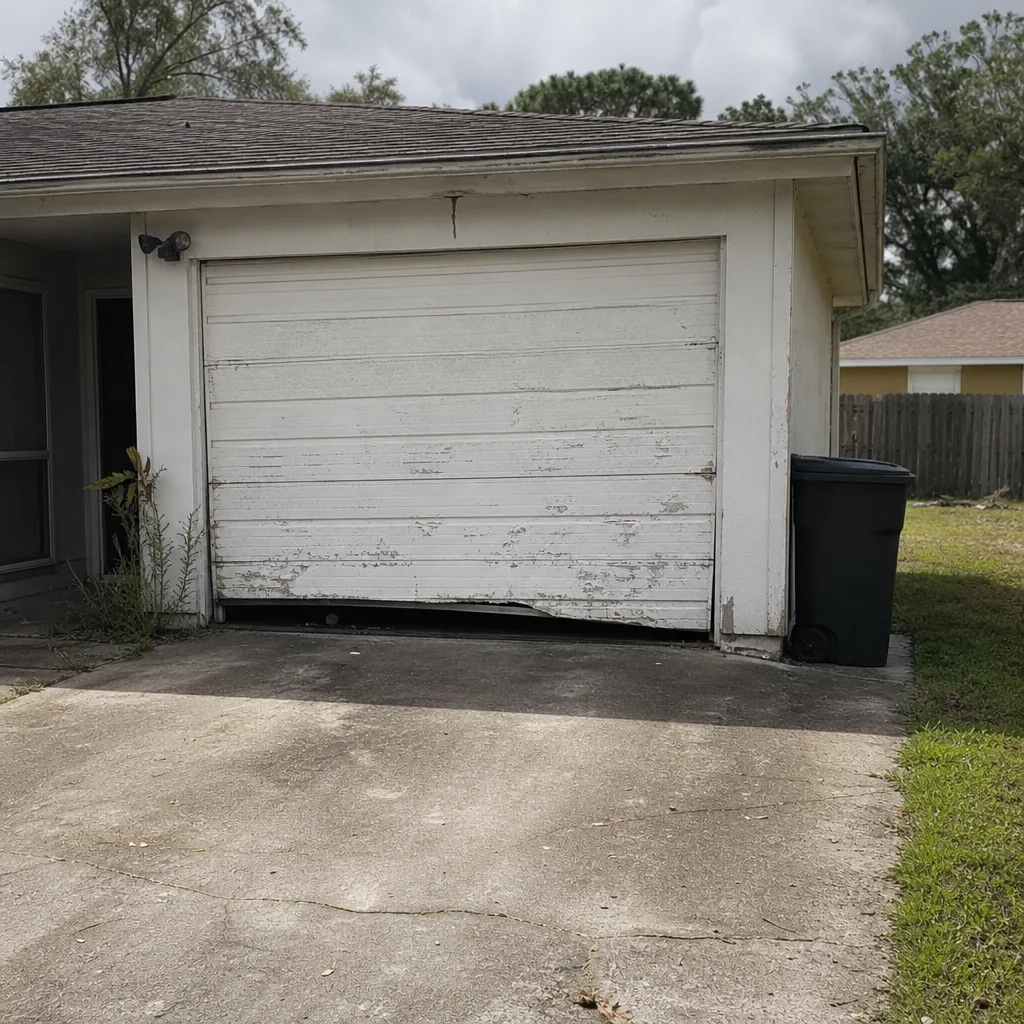 Before
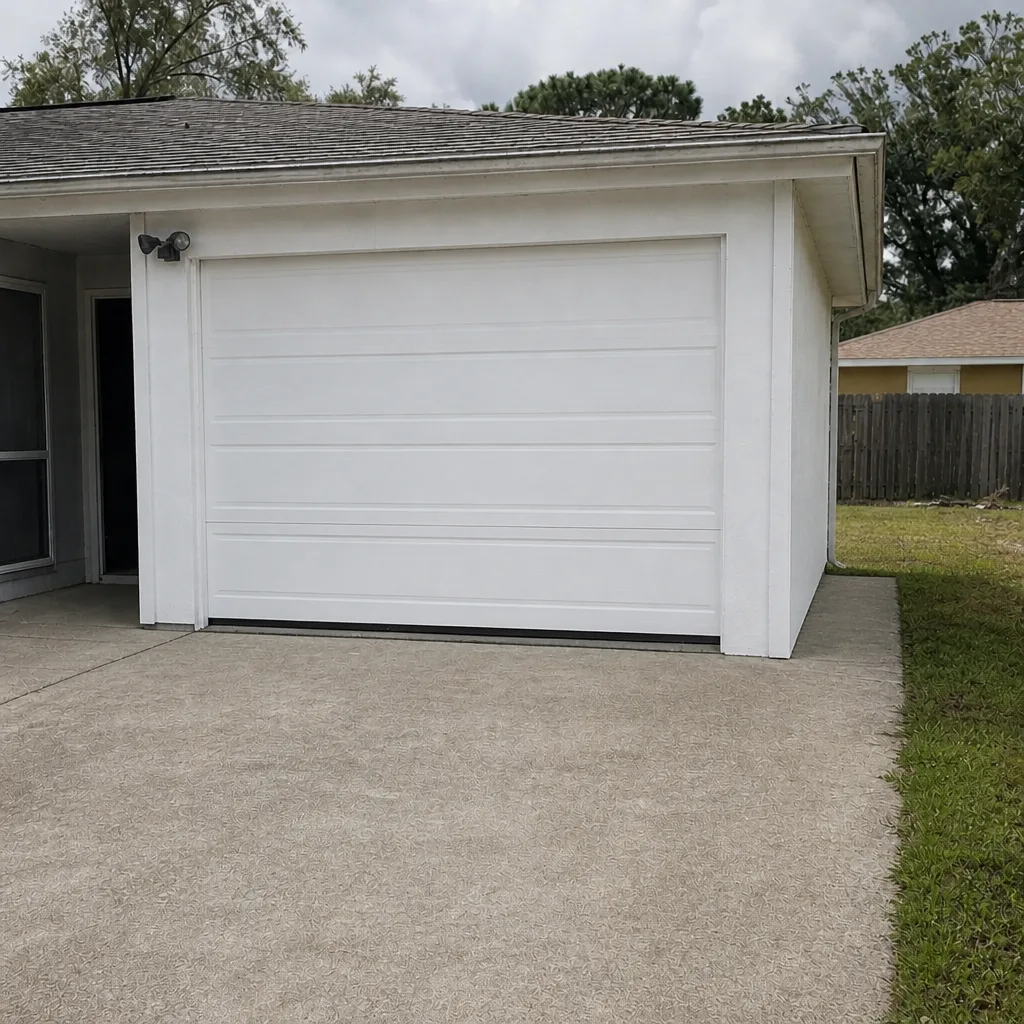 After
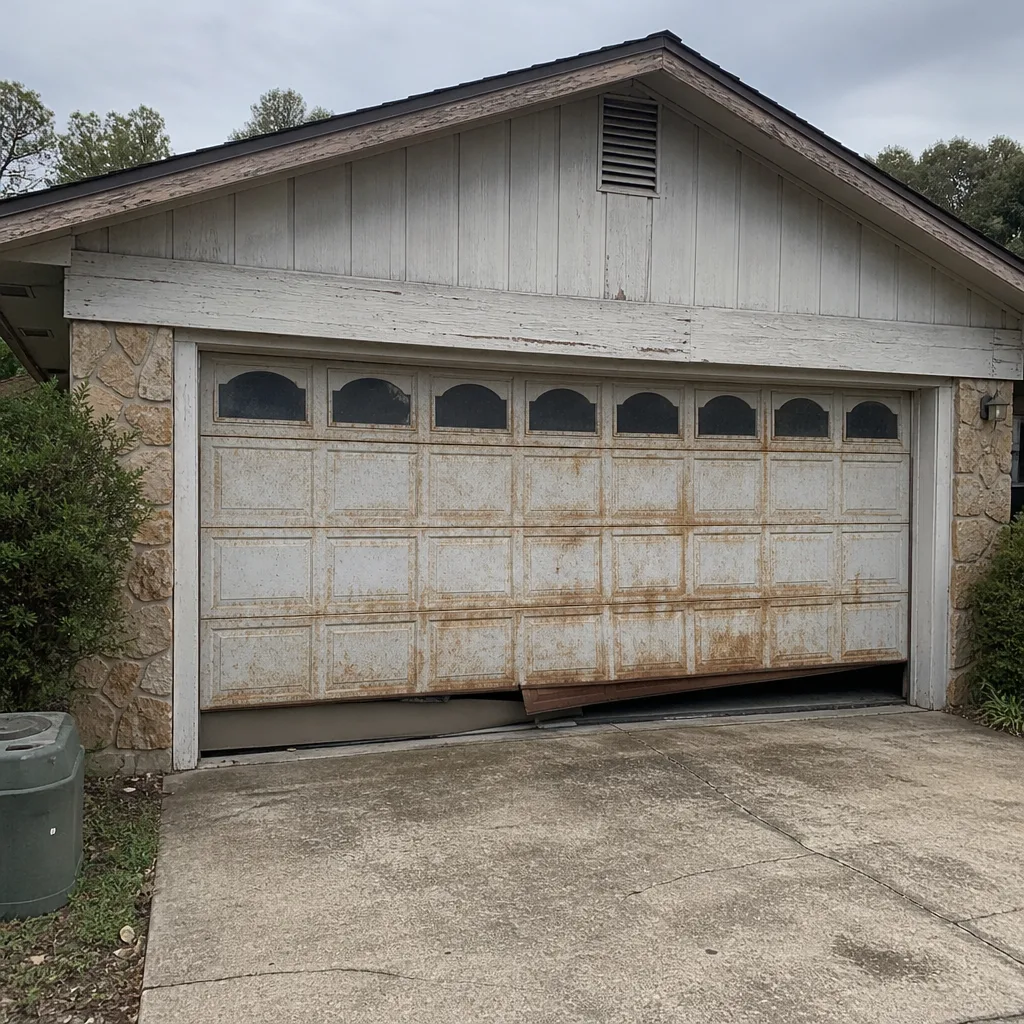 Before
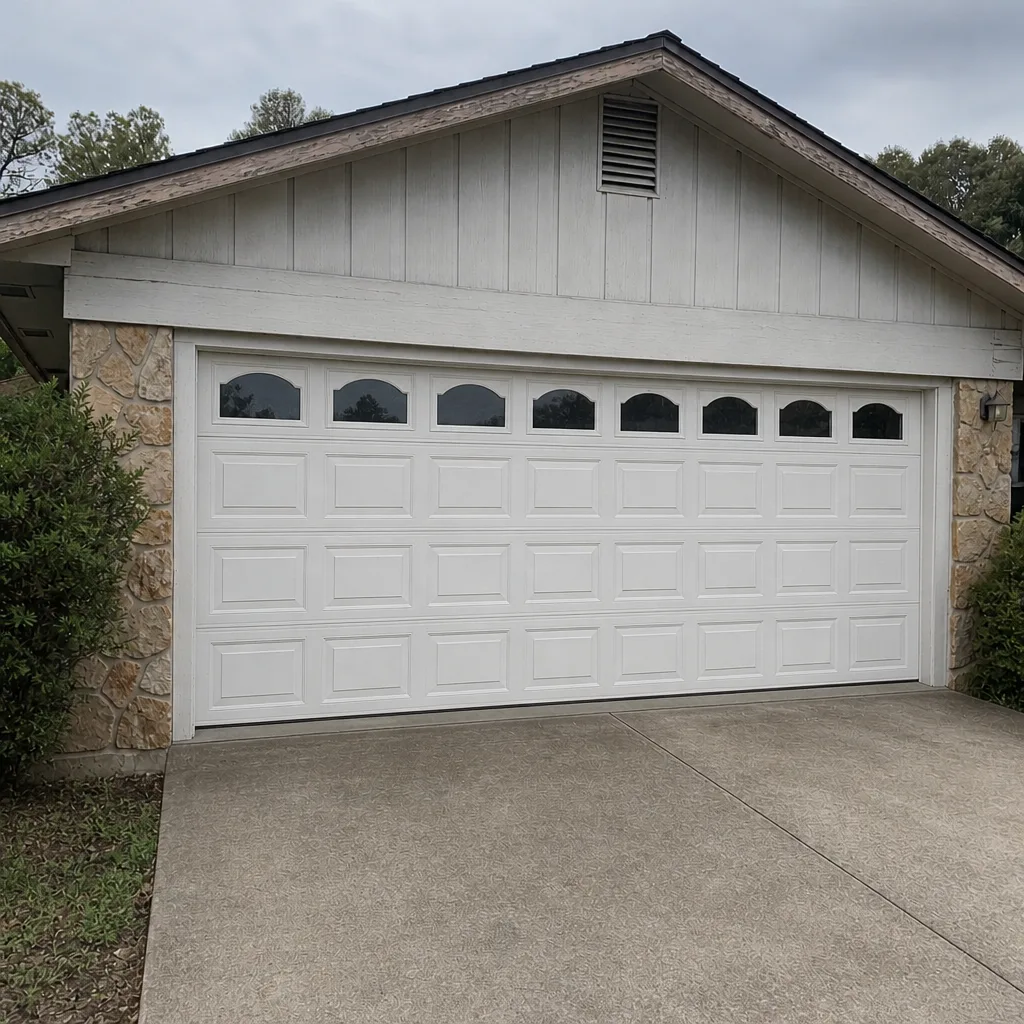 After
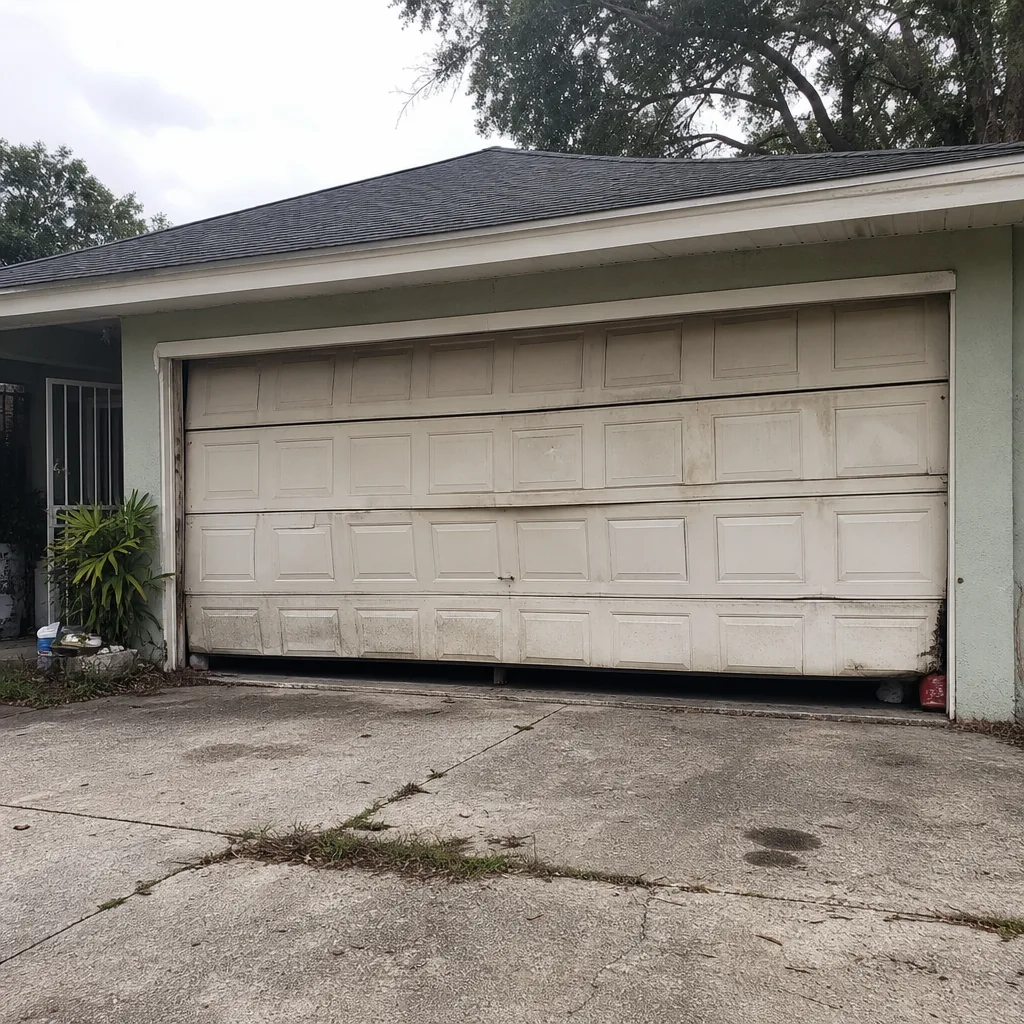 Before
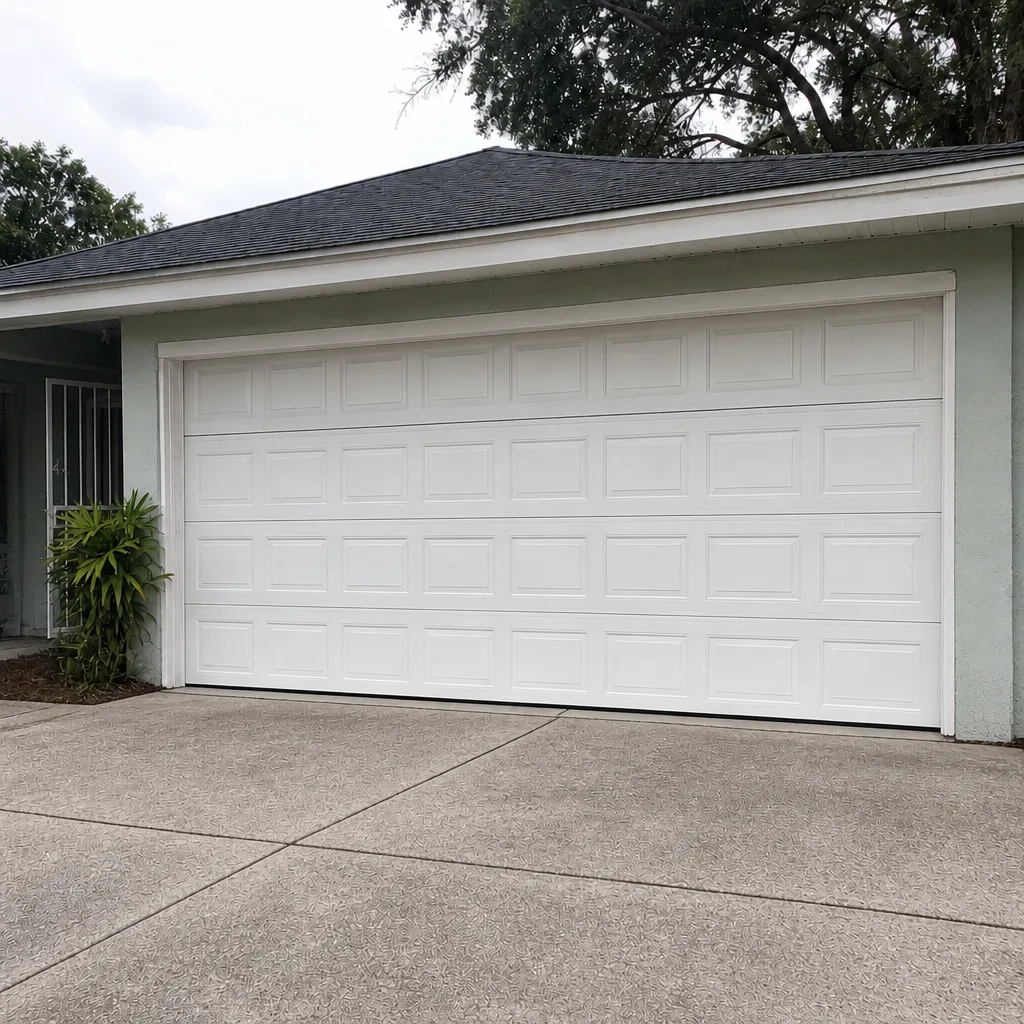 After
Common Mistakes to Avoid
- Cutting a torsion spring to shorten it. Spring length and wire size are matched to the door’s weight. A cut spring is a wrong spring, and it can fail when the door is used, not later.
- Using household oil or grease on tracks and hinges. Grease attracts grit and gum. It’s the wrong lubricant even on a job that’s otherwise DIY-safe.
- Adjusting more than one thing at once. Set the travel limit, test the door, then move on. Changing the limit, the force and the sensor aim in one visit means you can’t tell what fixed it.
- Pulling the emergency release on a door with broken springs. That release is for emergencies, and with the spring tension gone, a door can come down hard. Pro-only work.
- Assuming a new opener fixes a slow door. A door that’s out of balance puts strain on every opener you mount on it. Correct the door first.
- Skipping the permit or the licensed contractor for a replacement. In Orange County this is the rule, and it’s the one DIY decision that can cost a homeowner paperwork trouble on a sale years later.
- Improvising winding tools for a spring. A screwdriver or a piece of rebar is exactly the tool that makes spring work dangerous. Use the right bar or call a professional.
When to Call a Professional
Call a professional when the job involves a spring, a cable, a bottom bracket, a panel or a structural repair, and when it involves a new door or opener installation in an Orange County home. Call also if the door is out of balance, won’t stay up when you lift it partway, or has a sensor or opener problem you can’t solve in a reasonable amount of your own time. And call for the wear points that only a trained eye catches: a fraying cable, a bent track, a roller that’s come loose.
Pine Hills Garage Door Repair Co offers free estimates in Pine Hills. We’ll tell you whether you’re looking at a repair or a bigger job, quote the price in writing before any work starts, and never recommend a service you don’t need. Call (844) 443-3644 and we’ll book a time.
Frequently Asked Questions
No. Garage door spring repair is the most dangerous repair on the door because torsion and extension springs store enough force to cause serious injury, so it’s work for a trained professional. A spring that has failed is under no tension at rest, but the replacement must be wound to match the door’s weight, and the winding itself is where the risk sits. Call (844) 443-3644 for an estimate.
In most cases, yes, and permitted work generally must be done by a licensed contractor, so garage door replacement isn’t a legal DIY project in Orange County. The rules can be specific to the door type, so call the county building department for your address before any new door is ordered. Repairs like sensor replacement or limit adjustment don’t need a permit. Call (844) 443-3644 if you’d like a licensed professional to handle the installation.
Yes, adjusting the travel limit is one of the genuinely DIY-safe jobs. You’re changing where the opener stops the door, which is low-voltage control work and doesn’t touch stored spring force. Follow your opener’s manual (Chamberlain and Genie both publish clear steps), and test the safety reverse afterward. If the door still won’t close properly, call (844) 443-3644 and we’ll diagnose it.
Spring work is quoted by the number of springs and the door size, and a matched pair is usually replaced together, so the pair costs more than a single spring. We give a written estimate before any work starts, so the price is agreed up front rather than disclosed on the invoice. Call (844) 443-3644 for an exact quote, since estimates are free.
A door that won’t close with nothing visibly broken is usually a sensor issue, a travel-limit problem or an opener fault, while a broken spring makes the door heavy and hard to lift by hand. A spring failure also often leaves the door stuck partway or makes a loud snap. If you’re not sure which you have, don’t force the door; call (844) 443-3644 and we’ll work out the safest next step.
Yes, same-day and emergency service is a real part of what we do, because a broken spring or a door stuck off its tracks disrupts the day. If you call early, we work to get a technician to you the same day, and if your door fails on a Sunday we can usually book you then as well. Call (844) 443-3644.
The Bottom Line
The DIY vs. professional question for your garage door isn’t about whether you’re handy. It’s about stored energy and code. Sensor swaps, limit adjustments, remote programming, lubrication and weather-stripping are fair game for a careful homeowner, and they’ll save you a service call. Springs, cables, bottom brackets, panel replacement and any installation belong to a trained and licensed professional, because the consequences of a mistake are injury or paperwork trouble rather than a blown afternoon. Every Pine Hills homeowner deserves a straight answer about which side of that line they’re on, and a quoted price before the work starts. Written by the team at Pine Hills Garage Door Repair Co.
If you’re not sure which side a job falls on, call (844) 443-3644 for a free estimate. We’ll tell you the truth about your door, whether that means a repair, a replacement, or advice to do a small job yourself.
Written by the team at Pine Hills Garage Door Repair Co.